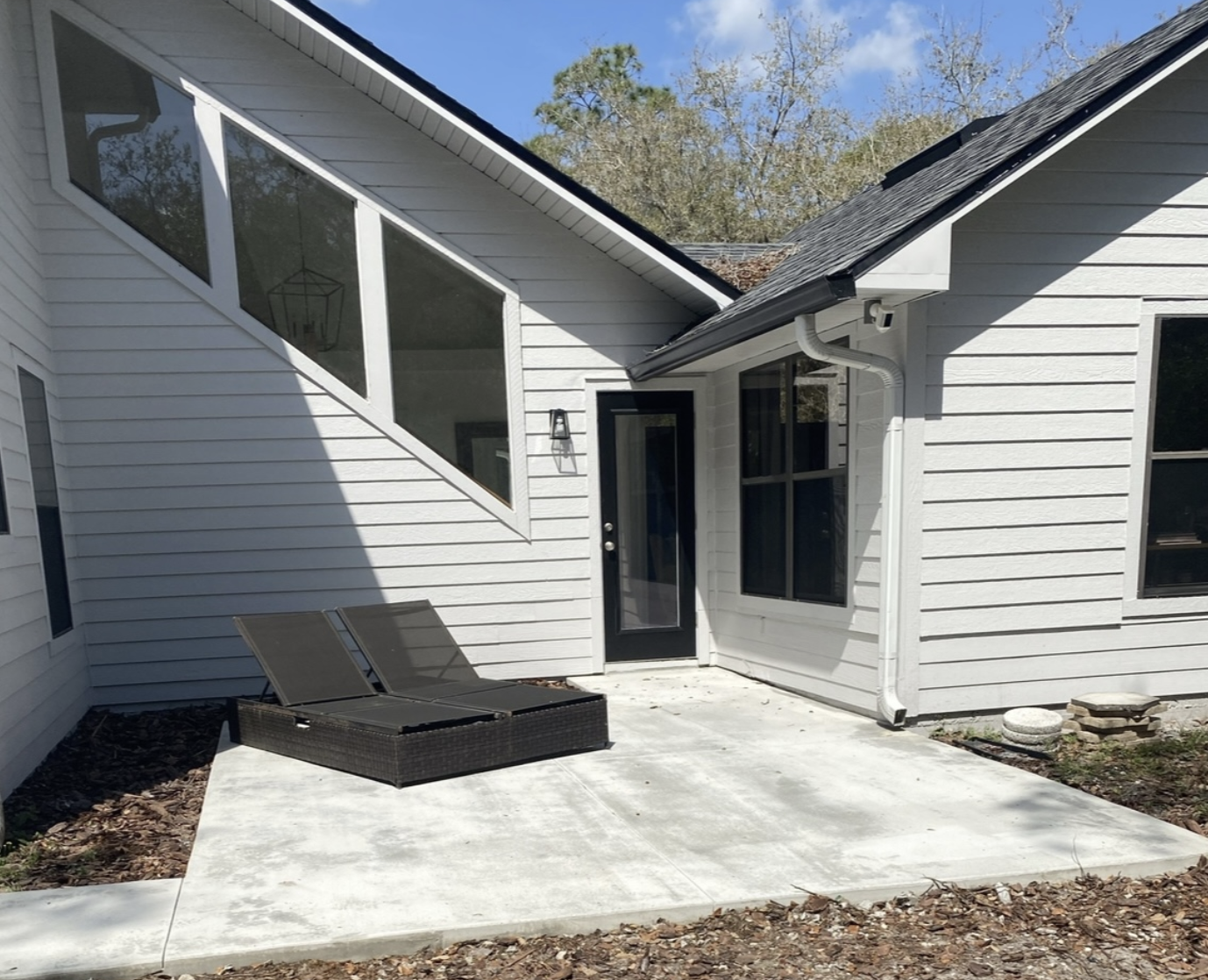
Orlando patios don’t get a break. The sun hammers down from morning to evening, UV rays bleaching every surface that isn’t properly protected. Afternoon thunderstorms dump inches of rain with zero warning. And the humidity — thick, relentless, year-round — never lets concrete fully breathe. Most homeowners pour money into a beautiful patio finish, only to watch it crack, fade, and peel within two seasons. Not because they chose cheap materials. Because they chose the wrong finish for the wrong climate.
Central Florida is one of the most demanding outdoor environments in the entire country. A finish that performs beautifully in Georgia or Texas will fail here in months. Getting it right means understanding exactly what climate does to concrete — and choosing a finish, color, and protection system built to survive it. This guide covers everything: surface options, color strategy, sealer selection, and maintenance schedules — all specific to conditions. Read it once, get it right the first time.
Why Your Patio Finish Choice Matters
Orlando doesn’t belong in the same conversation as regular climates. Four forces hit every outdoor surface here without mercy — extreme heat, punishing UV radiation, sudden heavy rainfall, and humidity that never fully clears. Most places deal with one or two of these challenges at a time. Central Florida deals with all four, every single day, twelve months a year. Concrete finishes that hold up perfectly in cooler or drier regions start crumbling, fading, and peeling here within a single season — and that brutal combination is exactly why picking the right patio finish in is a decision that demands serious thought.
The Climate Problem
Concrete is porous by nature. When it absorbs water, that water expands and contracts with temperature changes, slowly breaking the surface apart. Where temperatures can swing between the high 50s at night and the mid-90s during the day in summer, this thermal cycling is relentless. Add standing water after afternoon thunderstorms, and you create the ideal condition for mold, mildew, and algae growth right on your patio surface.
UV damage is equally destructive. Without proper UV-blocking sealers, concrete pigments fade within 12 to 18 months of installation. What started as a rich terra cotta or deep charcoal quickly becomes a washed-out, chalky surface that makes your whole backyard look neglected.
Surface Options That Stand Up
Patios don’t reward shortcuts. The same finish that looks stunning on day one can turn into a cracked, faded, slippery mess within two seasons if it wasn’t built for Florida’s punishing conditions. Every surface option comes with its own set of strengths — some excel at handling heavy foot traffic, others fight off moisture and heat better than the rest.
Understanding how each finish actually performs under Central Florida’s sun, rain, and humidity is the difference between a patio that holds its edge for a decade and one that demands constant repairs. Here is a breakdown of the most popular concrete patio finishes and exactly what each one brings to the table in Florida’s demanding climate.
Smooth Trowel Finish
A smooth trowel finish creates a clean, modern surface with crisp, flat lines. It pairs beautifully with contemporary homes that feature large glass doors, clean architectural angles, and minimalist landscaping. Sweeping and cleaning is effortless — a quick pass with a broom or leaf blower keeps it looking sharp.
The downside is that a smooth finish shows every mark, leaf stain, and footprint clearly. In an environment where fallen leaves, pollen, and mud are constant, this finish requires more frequent attention to look its best. It also becomes slippery when wet, making it a poor choice for pool deck areas without an added anti-slip coating.
Brushed Concrete Finish
Brushed concrete is the most popular finish in Central Florida for good reason. During installation, a stiff brush is dragged across the wet concrete surface, leaving fine parallel lines that add just enough texture for grip without changing the overall look dramatically. This subtle texture improves traction significantly, especially after rain.
Brushed concrete is versatile enough to fit almost any home style — traditional, craftsman, ranch, or modern — and it holds up remarkably well to heavy foot traffic, furniture weight, and Florida weather cycles. It is one of the most practical and durable choices for homeowners.
Salt Finish
The salt finish is a poolside classic throughout Florida. During installation, rock salt crystals are pressed into the freshly poured concrete, then washed away once the surface hardens, leaving behind a field of tiny pits and dimples. This naturally textured surface stays cooler underfoot than plain concrete in direct sun and provides excellent grip when wet — making it ideal for pool decks and outdoor shower areas.
Salt finishes also have excellent natural drainage characteristics, reducing puddle formation after rain. The only consideration is that the texture can trap fine debris like sand and pine needles, requiring occasional blowing or rinsing.
Stamped Concrete
Stamped concrete uses patterned molds pressed into wet concrete to mimic the look of pavers, brick, natural stone, or slate. The visual result can be stunning, and it adds real curb appeal and property value. However, stamped concrete requires more careful maintenance than other finishes. The texture grooves can trap dirt and organic material, and the sealers used on stamped surfaces typically need reapplication every two to three years.
Exposed Aggregate Finish
Exposed aggregate finishes reveal the natural stones, pebbles, and sand within the concrete mix by washing away the surface paste before it fully cures. The result is a naturally textured, visually interesting surface with excellent slip resistance. Exposed aggregate is one of the most durable finishes available and holds up particularly well in high-traffic areas.
How to Choose the Right Texture for Your Lifestyle
The best patio finish is not just about aesthetics — it is about how you actually use your outdoor space. Before you commit to a finish, think honestly about your lifestyle and the demands you will place on your patio.If you host large gatherings regularly, durability and easy cleaning should drive your decision. Brushed or exposed aggregate finishes handle heavy foot traffic and furniture movement without showing wear. They are also easier to clean after parties.
Your priority is a quiet, private retreat, texture and visual warmth matter more. Stamped concrete or a salt finish with warm earth tones creates an inviting, resort-like atmosphere that makes spending time outdoors feel like a luxury.If you have young children or pets, slip resistance is non-negotiable. Avoid any smooth finish near pool areas or lawn transitions where surfaces get wet. Salt finish, brushed concrete, or exposed aggregate are all smart choices for active families.
If your patio doubles as a dining or cooking area, think about stain resistance. Grease, food, and beverage spills are inevitable. A tightly sealed, lightly textured surface will be far easier to maintain than a heavily pitted one.
Color Choices That Work in Orlando
Color is one of the most important and most underestimated decisions in patio design. The wrong color choice does not just look bad — it makes your outdoor space physically uncomfortable to use. White and very light concrete colors reflect the most sunlight, which helps keep the surface cooler. But white shows every stain, tire mark, leaf tannin, and mildew streak in vivid detail. In the environment, a white patio can look dingy within months without aggressive, consistent maintenance.
Dark colors like deep charcoal, espresso, or dark slate absorb heat rapidly. On a 95-degree summer afternoon, a dark-colored concrete surface can reach temperatures exceeding 140 degrees Fahrenheit — genuinely painful to walk on barefoot. The optimal range for patios sits in the mid-tones: warm tans, natural beiges, soft grays, terracotta tones, and sage greens.
These colors balance heat absorption and reflectivity while hiding the inevitable day-to-day dirt and organic debris that come with Florida outdoor living. They also complement the lush greenery, tropical plantings, and natural landscape that characterizes Central Florida properties.
Best Color Combinations for Orlando Pool Decks
Pool deck color selection carries more weight than any other patio decision. The deck sits in direct sun for hours, gets soaked multiple times a day, reflects intense glare off the water surface, and takes the bare feet of every person who uses the pool. Choose too dark and the surface becomes unbearable to walk on by midday — concrete absorbs heat rapidly and dark shades can reach scorching temperatures under Florida’s summer sun.
Choose too light and every scuff, algae streak, and chemical stain shows up in vivid detail within weeks. The sweet spot lies in strategic mid-tone combinations that balance heat reflectivity, visual comfort, and real-world durability. Beyond temperature and maintenance, color also sets the entire mood of your outdoor space — a well-chosen palette makes the pool area feel intentional, polished, and connected to the rest of the home rather than just a plain gray slab surrounding water.
| Color Combination | Style Match | Heat Level | Glare Reduction | Stain Visibility | Maintenance Level | Best Feature |
| Sandstone + Ivory Border | Traditional, Transitional | Low | Excellent | Low | Easy | Stays cool, hides everyday dirt |
| Warm Gray + Charcoal Border | Modern, Contemporary | Medium | Good | Low-Medium | Easy | Sleek look, very versatile |
| Terracotta + Sand Blend | Mediterranean, Spanish | Medium | Good | Low | Moderate | Warm, resort-like atmosphere |
| Slate Blue-Gray + White Border | Coastal, Beach-Inspired | Low-Medium | Excellent | Low | Easy | Reflects light without harsh glare |
| Buff + Cocoa Brown Border | Craftsman, Ranch | Medium | Good | Low | Easy | Natural earth tone, timeless appeal |
| Soft Sage Green + Beige | Tropical, Garden-Style | Low-Medium | Good | Low | Moderate | Blends beautifully with landscaping |
| Natural Stone Blend (Tan + Brown) | Tropical, Resort-Style | Medium | Good | Very Low | Moderate | Mimics natural stone, hides stains |
| Pearl White + Light Gray Border | Minimalist, Ultra-Modern | Very Low | Excellent | High | High | Maximum heat reflection, sharp look |
| Adobe + Rust Accent | Southwest, Rustic | Medium-High | Moderate | Very Low | Easy | Bold character, excellent dirt hiding |
| Driftwood Gray + Sand | Farmhouse, Coastal | Low-Medium | Excellent | Low | Easy |
Real Protection for Florida Weather
A beautiful patio finish that is not properly sealed is a patio finish on borrowed time. Florida’s weather attacks concrete from multiple angles simultaneously — UV radiation breaks down surface pigments, water infiltrates and causes cracking, and constant humidity creates ideal conditions for biological growth. Professional-grade protection addresses all of these threats.
Why Basic Sealers Fail in Florida
Consumer-grade sealers available at home improvement stores are typically acrylic-based and offer limited UV resistance and water repellency. They may look fine for the first season, but Florida’s intensity wears them down quickly. You will start seeing color fading, white hazy spots from moisture trapped under the sealer, and eventually surface peeling.
What Professional-Grade Protection Includes
UV-blocking topcoats contain UV inhibitors that prevent the sun from breaking down concrete pigments and the sealer itself. This keeps colors true year after year rather than fading to a chalky, washed-out version of the original. Penetrating water repellents soak into the concrete rather than sitting on top, creating a hydrophobic barrier that prevents water infiltration without changing the look or feel of the surface. These are especially important for heavy afternoon rain events.
Mold and mildew inhibitors are critical in Florida’s high-humidity environment. Biological growth on concrete is not just ugly — it creates slippery, unsafe surfaces and breaks down the concrete material itself over time.
How Long Does Each Finish Last in Florida’s Climate?
No patio finish lasts forever — but in the climate, the gap between a finish that lasts eight years and one that lasts twenty-five comes down entirely to the decisions made at installation. Florida’s heat, UV exposure, and constant moisture cycle put every surface under a level of stress that most other climates simply don’t match. Some finishes are built with the density and flexibility to absorb that punishment year after year without breaking down.
Others look identical on day one but start showing wear within the first two seasons once Florida’s conditions get to work on them. Understanding realistic lifespan expectations for each finish type helps you make a smarter investment upfront — one that saves significant money on repairs, recoating, and premature replacement down the road.
Finishes Built for the Long Haul
Brushed concrete and exposed aggregate consistently deliver the longest lifespans in Florida’s outdoor environment, often holding strong for twenty to thirty years with proper care. Their durability comes from the fact that both finishes work with the natural strength of concrete rather than layering a coating on top of it.
Because the texture is part of the concrete itself rather than an applied surface, there is nothing to peel, chip, or separate under thermal stress. Regular resealing every two to three years keeps moisture out and color locked in, extending the life of these finishes well beyond what most homeowners expect.
Mid-Range Finishes That Reward Maintenance
Stamped concrete and salt finishes fall into a middle tier — capable of lasting fifteen to twenty-five years in Florida conditions, but only when maintained consistently and correctly.
Both finishes rely heavily on their sealer layer for protection, which means skipping or delaying resealing directly shortens their lifespan. Stamped concrete, in particular, is vulnerable to sealer breakdown because its textured grooves collect debris and moisture, accelerating wear in those areas first.
Shorter-Lived Options and When They Still Make Sense
Concrete overlays, epoxy coatings, and consumer-grade painted finishes carry shorter lifespans in Florida’s outdoor environment — typically eight to fifteen years under ideal conditions, and often less without diligent upkeep.
That does not make them bad choices across the board, but it does mean going in with realistic expectations. Epoxy coatings, for example, are exceptional for covered patios or garage-adjacent areas where direct UV exposure is limited, but they degrade significantly faster when left fully exposed to Florida’s sun.
Common Mistakes to Avoid When Finishing a Patio
The biggest patio failures don’t come from bad materials — they come from bad decisions made before a single drop of concrete is poured. Quality products and experienced contractors can only deliver great results when the planning behind them is solid. A wrong texture choice, a skipped prep step, or a sealer applied under the midday Florida sun can quietly sabotage an otherwise excellent installation.
These mistakes don’t always show up immediately, either — some take a full season of heat and rain cycles to surface, by which point repairs are far more expensive than prevention would have been. Here are the most common errors homeowners make when finishing a patio, and exactly how to avoid every one of them.
- Skipping proper surface preparation: The most important step in any concrete finishing project is preparing the existing surface. Skipping acid etching, cleaning, or crack repair before applying a finish or coating almost guarantees early failure. The new material simply will not bond properly to a contaminated or compromised surface.
- Choosing the wrong finish for the location: Smooth finishes near pools, shaded areas that stay damp, or high-traffic zones are a recipe for slipping accidents and rapid wear. Match the finish texture and characteristics to the specific demands of the location.
- Applying sealers in the wrong weather conditions: Sealers applied in direct midday sun in Florida can bubble, cloud, or cure improperly. Professional applicators know to work in early morning, late afternoon, or on overcast days to ensure proper curing.
- Using consumer-grade products in a commercial-intensity environment: Florida’s sun and humidity are genuinely extreme. Budget products designed for moderate climates will underperform significantly. This is not a place to cut costs on materials.
- Ignoring expansion joints: Concrete expands and contracts with temperature changes. Without properly placed and maintained expansion joints, thermal movement causes cracking in predictable locations. Many homeowners see cracks and blame the contractor when the real issue is inadequate joint placement or maintenance.
- Waiting too long to reseal: Once you can see water soaking into the concrete surface rather than beading up on top, the sealer is gone. At that point, damage is already occurring. Resealing on schedule — before failure — is far less expensive than repairs after water infiltration has caused cracking or staining.
Transform Your Orlando Outdoor Space
Your patio is not just a slab of concrete. It is an extension of your home, a place where you relax, entertain, and spend time with the people who matter most. Choosing the right finish — one that is matched to climate, your home’s style, and your lifestyle — transforms that slab into something genuinely valuable.
The difference between a patio that embarrasses you after two seasons and one that looks sharp after ten years comes down to three decisions: the right finish for your conditions, professional-grade protection, and a consistent maintenance schedule. Make all three correctly, and your patio will be one of the best investments you ever make in your home.
Conclusion
Every patio decision made upfront pays off for years — or costs you for years. climate does not forgive poor choices, and it does not wait long to expose them. The right finish, matched to your lifestyle and protected with professional-grade sealers, is the single most effective investment you can make in your outdoor space. Get those three decisions right — surface, color, and protection — and your patio stops being a maintenance burden and starts being the outdoor living space your home deserves.
Concrete Solutions of Central Florida understands what patios are up against. Every finish recommendation, every sealer choice, and every installation decision we make is built around Central Florida’s specific climate demands — not generic best practices borrowed from other markets. Whether you are starting from a bare slab or renovating a surface that has already taken years of Florida weather, the right approach is available for every situation and every budget. Call us today and let’s build a patio finish that holds up, looks sharp, and keeps delivering value long after the last trowel hits the concrete.
FAQS
What is the best finish for an outdoor patio floor?
Brushed concrete stands out as the best all-around finish for outdoor patio floors, delivering the ideal balance of grip, durability, and low maintenance that most homeowners need. For pool decks and wet areas specifically, a salt finish edges ahead — its naturally pitted texture stays cooler underfoot and handles moisture without becoming a slip hazard.
What is the longest-lasting patio material?
Concrete is the longest-lasting patio material available, with properly installed and sealed slabs holding strong for thirty years or more, even under demanding conditions. Among concrete finish types, exposed aggregate and brushed concrete consistently outlast all other options because their texture is part of the concrete itself rather than a coating applied on top.
What is the best material for patio furniture in Florida?
Powder-coated aluminum is the top choice for Florida patio furniture — it resists rust, handles humidity without warping, and stays lightweight enough to move when storms roll in. Teak wood and high-density polyethylene (HDPE) lumber are strong alternatives, both built to withstand UV exposure and moisture without cracking, fading, or deteriorating over time.
What is the best surface for an outdoor patio?
Concrete remains the best overall surface for outdoor patios because it combines structural strength, design flexibility, and long-term durability in a way no other material matches. With the right finish and professional-grade sealing, a concrete patio handles heavy foot traffic, extreme heat, and heavy rainfall without breaking down.
How to make your patio look expensive?
Strategic color combinations, clean border definition, and a high-quality sealer that deepens the finish and adds a subtle sheen instantly elevate a patio from basic to polished. Adding stamped patterns, contrasting inlay borders, or a decorative exposed aggregate section creates the layered, intentional look of a professionally designed outdoor space without the cost of full hardscape replacement.
Professional Concrete Services in Orlando, FL
Accu-Krete provides reliable concrete installation, repair, decorative concrete, patios, driveways, and sidewalk solutions for homeowners and businesses across Orlando and nearby areas.