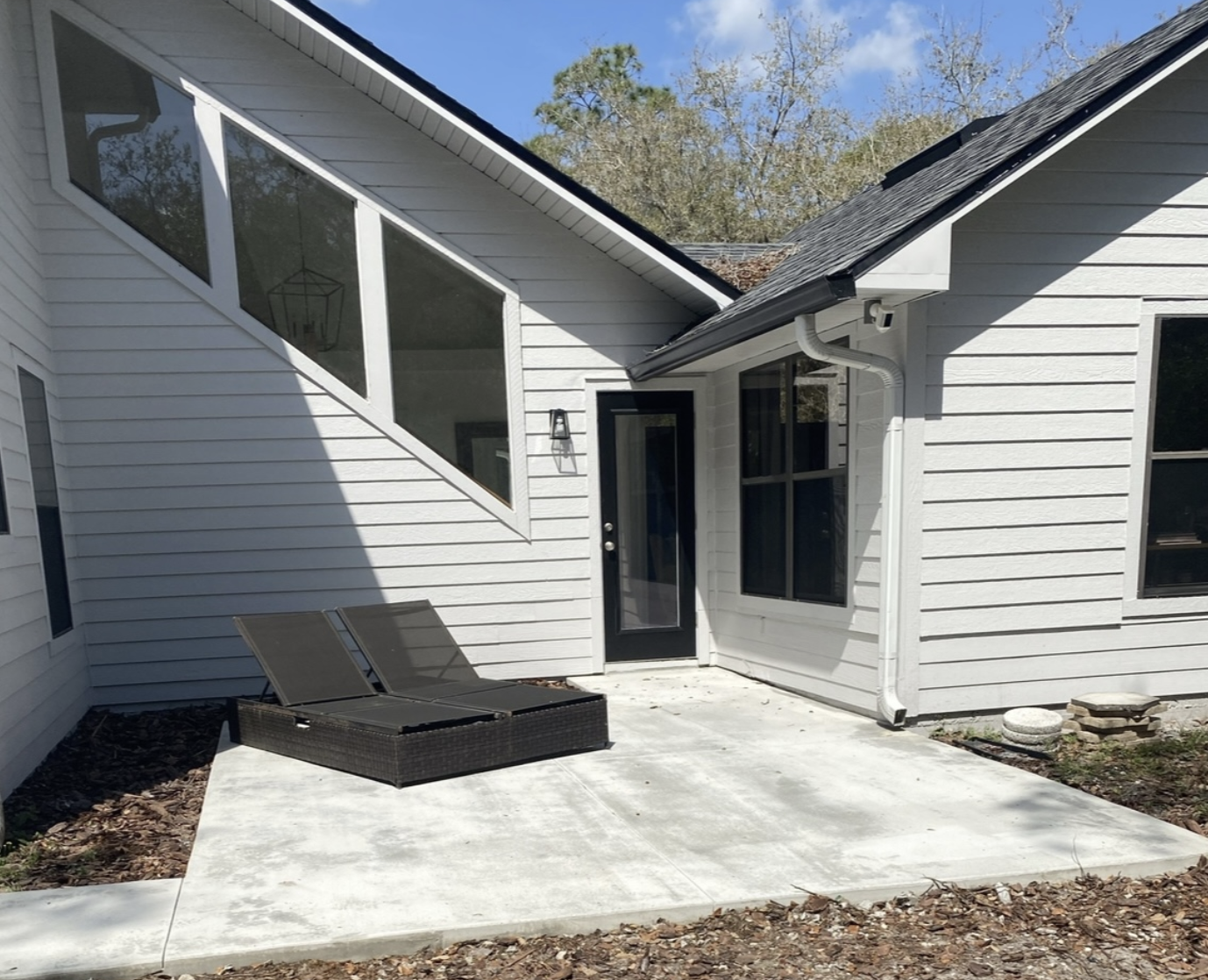
Hiring a contractor for heavy structural work requires strict due diligence. In Florida, concrete placement, foundation reinforcement, and specialized masonry directly impact the structural integrity of a building and must comply with rigorous state building codes. Failing to confirm that a company holds a valid, active credential from the Construction Industry Licensing Board (CILB) exposes property owners to severe legal penalties and financial liabilities.
Verifying a professional takes less than five minutes but saves thousands of dollars in potential damages. Homeowners and commercial property managers must look beyond marketing claims and validate credentials directly through official state channels. This guide outlines the exact regulatory risks of skipping verification and provides a step-by-step framework to audit any business using the state’s official database.
Risks of Hiring Unlicensed Concrete Contractors
Operating without a valid license is a non-criminal misdemeanor for a first offense, escalating to a third-degree felony during a declared state of emergency. An unlicensed concrete contractor lacks the legal authority to pull a building permit that municipalities require for structural alterations, driveways, or additions. Without a permit, local code enforcement can halt your project mid-process, issue heavy fines, and force you to demolish the unverified work at your own expense.
Financial and Property Damages Caused by Uncertified Crews
When property owners hire unverified operators, they lose all regulatory recourse and access to state consumer recovery funds. If an uncredentialed crew delivers a faulty pour, causes structural cracking, or damages underground utility lines during a concrete driveway installation or concrete patio construction, you must cover the remediation costs out of pocket. Furthermore, substandard flatwork reduces property values, fails municipal inspections, and often requires complete removal by a legitimate professional. This lack of structural oversight means the mix ratio could be weak, leading to rapid deterioration under heavy vehicular loads.
Complete Lack of Regulatory Oversight and Legal Recourse
The state regulatory boards exist to protect consumers from predatory business practices and subpar construction performance. When you willingly hire an entity operating outside of this system, the state cannot assist you when the project goes awry. Unlicensed individuals cannot be disciplined by the board, meaning your only option for financial recovery is through civilian small claims court. Most illicit operators change business names or disappear entirely once a dispute arises, leaving you with no way to collect damages. Furthermore, the state will not issue a certificate of occupancy for properties with unpermitted major structural elements.
Legal & Financial Risks of Skipping Verification
Skipping the verification process shifts all operational liability from the business directly onto the property owner. To operate legally, construction companies must provide proof of general liability insurance to protect against property damage, alongside active Workers’ Compensation to cover on-site labor injuries. When you hire an unverified entity, you likely inherit their lack of coverage.
Insurance Vulnerabilities and Owner Liability
If an uninsured laborer slips or suffers an injury during a complex foundation repair project on your property, you can be held personally liable for their medical expenses and lost wages through your homeowner’s insurance or personal assets. Additionally, commercial general liability policies typically feature exclusions for damage caused by unlicensed subcontractors, leaving you fully exposed if the work undermines your property’s foundation. Homeowner insurance providers routinely deny claims for structural damage if they discover the work was executed by an unverified entity.
Contract Voidance and Mechanics Lien Vulnerabilities
Contracts signed with unlicensed entities are considered legally unenforceable under state law, meaning the contractor can walk away mid-project without consequence. Paradoxically, material suppliers can still place a mechanics lien against your home if the unlicensed contractor fails to pay for the delivered concrete. This means you could end up paying for the raw materials twice just to clear your property title. Legitimate lending institutions will also freeze construction draws immediately if they discover the builder lacks active credentials.
Step 1: Ask for License Credentials Upfront
Before scheduling an estimate for a concrete repair and leveling job, require the company to provide their state registration or certification numbers. Legitimate businesses operating under entities like a localized Concrete Solutions FL license number must prominently display their license credentials on all commercial vehicles, contracts, and advertisements.
Requesting and Validating the Certificate of Insurance
When you receive these credentials, request a current Certificate of Insurance (COI). This certificate must be issued directly from their insurance broker to you as the holder, explicitly outlining their active general liability limits and statutory workers’ compensation provisions. Do not accept a photocopied certificate directly from the contractor’s hands, as these are easily falsified and can disguise an expired policy. A legitimate agent will email the documentation directly to ensure full transparency and verify the policy limits match your project requirements.
Verifying Identity and Spotting Credential Renting
An increasingly common scam involves illicit operators using a legitimate professional’s license number without their explicit knowledge or consent. To counter this tactic, always ask the representative for a government-issued photo identification card during your initial face-to-face consultation. Cross-reference the name on the identification card with the qualifying agent listed on the state documentation. If the names do not match, demand written proof of employment showing they legally represent the licensed entity. Passing this screening step ensures you are dealing with an actual employee rather than an independent scammer.
Step 2: Search the MyFloridaLicense Portal
Once you have the credentials, cross-reference them directly using the Florida DBPR license search portal managed by the Department of Business and Professional Regulation. Do not rely solely on external third-party validations like a BBB rating and reviews or localized Google Business Profile reviews; while these platforms help assess customer service, they do not guarantee real-time regulatory compliance.
Executing the Contractor License Lookup Process
To run a successful verification, navigate to the official DBPR portal, select the option to search by license number, and input the provided digits. Confirm that the license classification matches the scope of work, such as a Certified General Contractor or a specialized Specialty Structure contractor (SCC). Ensure the name of the qualifying agent matches the individual signing your contract to prevent identity theft or illicit license renting. If the business is registered under a different corporate name than what is advertised, verify the fictitious name registration through the state division of corporations.
Identifying License Status and Past Infractions
When reviewing the search results, verify that the current operational status is explicitly marked as active. If the database reveals a license status Active Delinquent, the contractor has failed to renew their credentials, pay state fees, or complete mandatory continuing education, meaning they cannot legally operate. Finally, expand the section for disciplinary actions DBPR to review the public log for past administrative complaints, citations, or unresolved consumer fraud violations before moving forward. Evaluating these public records helps you identify chronic project delays, structural abandonment, or legal disputes tied to the entity.
Step 3: Decode State Database Search Results
Once you generate results from the digital portal, you must accurately interpret the specific status combinations displayed. A license that merely exists is not sufficient; it must possess the correct operational designations to ensure legal compliance. If you misread the administrative markers, you risk executing a contract that is legally void from its inception.
Understanding Primary and Secondary Status Classifications
The state repository divides license credentials into primary and secondary status classifications that dictate real-time working parameters. A primary status marked as “Current” simply means the entity is registered with the department, but it must be paired with an “Active” secondary status to permit on-site construction. If the portal displays “Current/Inactive,” the builder has paid their standard fees but lacks the legal authority to practice or pull municipal permits. Any physical work performed under an inactive designation constitutes code non-compliance and halts progress during municipal inspections.
Spotting Delinquent, Suspended, and Disciplined Registrations
A primary reading indicating a license status of Active Delinquent alerts you that the individual failed to complete mandatory continuing education or missed their statutory renewal deadlines. Do not accept excuses regarding processing delays, as delinquent entities cannot legally pull a building permit for structural projects. Furthermore, check the disciplinary actions DBPR registry located at the bottom of the license profile to spot historical administrative penalties. A history of unresolved consumer complaints, unpaid administrative fines, or structural citations signifies an unstable enterprise that poses an immediate threat to your financial investment.
Step 4: Verify Liability & Workers’ Comp Insurance
A verified license profile is structurally incomplete without independent validation of the contractor’s commercial insurance portfolio. Never rely on physical paper copies handed over during an initial consultation, as certificates are easily altered to mask cancellations. You must audit their coverage limits using official state tracking platforms to protect your property from third-party liabilities.
Validating General Liability Portfolios
A legitimate concrete enterprise must carry active general liability insurance to cover catastrophic property damage or structural collapse. This coverage ensures that if a concrete mixer undermines your home’s foundation or ruptures a subterranean utility line, the remediation costs are absorbed by the carrier. Request that the business’s insurance broker issue a direct Certificate of Insurance naming you as the certificate holder for the duration of the project. This setup ensures you receive immediate automated notifications from the underwriting agency if the contractor allows the policy to lapse mid-pour.
Step 5: Cross-Check Sunbiz & Local Records
A comprehensive regulatory audit requires cross-referencing DBPR details with corporate registration databases and localized county enforcement records. Illicit operators frequently manipulate corporate aliases to outrun historical financial judgments or negative consumer market assessments. Verifying corporate continuity ensures the contracting party is an asset-backed legal entity rather than a transient shell organization.
Verifying Corporate Standing via Sunbiz
Navigate to the State Division of Corporations registry, known publicly as Sunbiz, to evaluate the active operational status of the business structure. Ensure the corporate entity matches the name listed on your construction contract and that its current state standing is designated as active. If the registry shows the business is dissolved or inactive, they cannot legally execute binding contracts or process business transactions. Match the listed corporate officers with the qualifying agent found on the DBPR portal to verify you are dealing with the authorized business owner.
Auditing Local Market Track Records
Once corporate legitimacy is verified, cross-reference their performance history through localized monitoring platforms to ensure consistent field execution. Check the BBB rating and reviews to analyze how the enterprise manages consumer disputes and to identify patterns of structural failure. Next, inspect their Google Business Profile reviews to assess recent client feedback regarding project timelines, scheduling consistency, and overall crew professionalism. Combining state database audits with local market assessments provides a holistic view of the company’s real-world operational health before capital is deployed.
What to Do If a Contractor Refuses Credentials
A contractor’s immediate refusal or hesitation to provide explicit licensing credentials or insurance details during an initial consultation is a major operational red flag. Legitimate construction professionals display their validation numbers prominently across all business assets, transport vehicles, and estimate documentation as a marker of market credibility. Attempting to bypass this foundational transparency indicates an entity operating outside the legal regulatory framework.
Terminating the Consultation and Project Negotiations
If an estimator utilizes high-pressure sales tactics or offers discounted pricing in exchange for bypassing formal credential documentation, terminate the consultation immediately. Working with an unlicensed concrete contractor strips away all statutory safety nets, including access to state-managed consumer restitution funds. Accepting verbal assurances instead of demanding verified registration numbers exposes your capital to immediate fraud and project abandonment. No competitive pricing advantage outweighs the financial risk of structural collapse or severe municipal fines stemming from unpermitted construction work.
Reporting Unlicensed Activity to State Authorities
Protect the local market by documenting the non-compliant entity and reporting their activity directly to the DBPR’s unlicensed activity enforcement unit. Provide the state board with the individual’s name, business aliases, vehicle descriptions, and any promotional materials collected during the consultation. The state routinely issues cease-and-desist notifications and levies criminal misdemeanors against unverified operators to suppress predatory construction practices. Reporting these interactions safeguards regional property standards and forces illicit operations out of the local real estate ecosystem.
Conclusion
Verifying professional credentials before executing a construction contract is the single most effective safeguard against property damage and financial fraud. Legitimate operators maintain active registrations, carry comprehensive liability policies, and transparently provide state-issued certification numbers upon request. Transitioning a project from concept to completion requires a systematic audit of these regulatory markers to mitigate the severe liabilities associated with illicit or non-compliant builders.
Investing the necessary time into background and credential checks removes structural ambiguity and secures vital consumer protections under state regulatory frameworks. By cross-referencing corporate registries, analyzing historical disciplinary records, and validating third-party insurance certificates, property owners insulate their assets from operational risk. True project success rests on rigorous preliminary vetting, transforming a substantial capital investment into an asset that adds verifiable, long-term market value.
Frequently Asked Questions
How do you know if someone is a contractor?
A legitimate contractor possesses a state-issued license number, provides detailed written estimates, carries active commercial liability insurance, and operates under a registered corporate entity rather than a personal identity.
How do I verify a contractor’s license in CA?
Run the provider’s nine-digit license number or corporate name through the online instant license check portal managed by the California Contractors State License Board (CSLB).
How to check a contractor’s license in TN?
Utilize the online license verification search tool provided by the Tennessee Department of Commerce and Insurance to confirm active registration and monetary limit classifications.
What is the difference between a registered contractor and a licensed contractor?
A registered contractor merely submits business details and pays a fee to a state list, whereas a licensed contractor must pass comprehensive competency exams, prove financial stability, and verify years of field experience.
How to identify a contractor?
Identify a professional builder by inspecting their commercial vehicles and contracts for legally mandated state license numbers, validating their active standing on state regulatory portals, and requesting direct certificates of insurance.
What are red flags when hiring a contractor?
Major warning signs include demands for cash-only deposits, a refusal to provide verifiable license credentials, high-pressure sales tactics, and requests for the property owner to pull necessary municipal building permits.
Professional Concrete Services in Orlando, FL
Accu-Krete provides reliable concrete installation, repair, decorative concrete, patios, driveways, and sidewalk solutions for homeowners and businesses across Orlando and nearby areas.