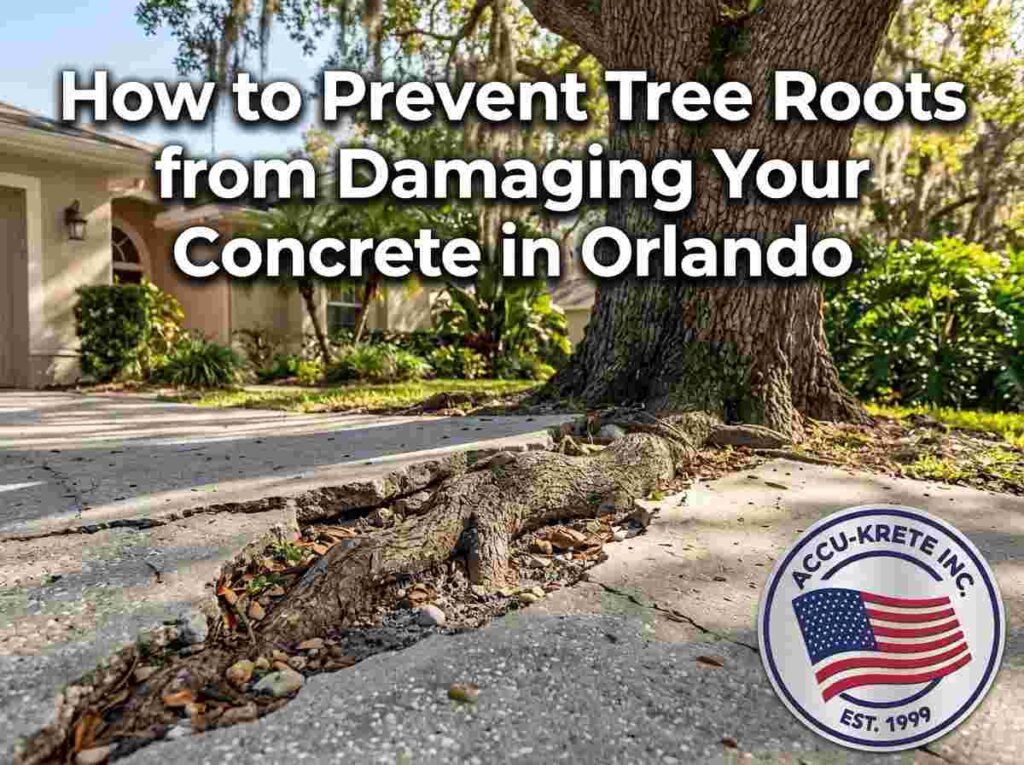
Managing a property in Central Florida requires an understanding of how rapid biological growth interacts with rigid infrastructure. Tree root damage to concrete is rarely a sudden event but rather a slow-motion collision driven by the search for nutrients in sandy soil conditions. Without proactive intervention, a beautiful canopy will eventually compromise the structural integrity of your driveways and walkways. Ensuring property investment protection starts with recognizing that subterranean root expansion is as powerful as any weather event.
Concrete Solutions of Central Florida often encounters homeowners who underestimated the force of a growing root system until the damage became a safety liability. Modern landscaping planning must prioritize the separation of biological needs and structural requirements to avoid costly future repairs. When moisture and root growth align, the resulting pressure can lift entire sections of a home’s exterior masonry. Addressing these risks early through strategic barriers and placement is the only way to maintain a pristine, level landscape.
5 Ways to Prevent Tree Root Concrete Damage
Preventing root intrusion requires a multi-layered strategy that begins before the tree is even planted or the first slab is poured. Passive growth will always follow the path of least resistance, which in many cases leads directly into the loose, aerated soil found immediately beneath a concrete pad.
To stop sidewalk lifting and the development of dangerous tripping hazards, property owners must implement physical and chemical deterrents. Relying on luck or “slow-growing” species is a recipe for failure in the humid, growth-conducive climate of Orlando.
Install Root Barriers for Concrete
Physical root barriers for concrete are the most effective way to redirect growth downward and away from the surface. These deep-seated shields act as a subterranean wall that forces the root system to expand at depths where it cannot exert upward pressure.
By installing these during new construction protection phases, you create a permanent boundary between the landscaping and the hardscaping. This minor upfront investment prevents the massive expense of tearing out and replacing buckled driveways later.
Prioritize Strategic Tree Placement
Proper tree placement for landscaping is a mechanical calculation rather than an aesthetic choice. You must research the mature tree size and its projected root radius before selecting a planting site near a home or driveway.
Maintaining a minimum distance of ten to fifteen feet for medium-sized trees ensures that the primary structural roots do not interfere with the slab. Ignoring these spatial requirements is the leading cause of early concrete slab shifting in residential areas.
Implement Deep Watering Techniques
Roots stay near the surface when they are forced to compete for shallow ground moisture. By utilizing deep-soaking irrigation methods, you encourage the tree to develop a vertical root architecture rather than a horizontal one.
This keeps the primary growth away from the surface, where it would otherwise cause uneven patios or sidewalk heaving. Consistent, deep hydration is a simple but overlooked form of preventing tree root damage.
Use Proper Concrete Thickness and Reinforcement
Standard residential concrete is often too thin to withstand the localized pressure of a thick, woody root. Increasing the slab thickness and utilizing rebar reinforcement provides the structural rigidity necessary to resist minor soil movements.
While this doesn’t stop the root, it significantly delays the onset of driveway cracks caused by shifting sub-grade material. A reinforced slab acts as a unified bridge that can better withstand the stresses of underlying biological growth.
Schedule Regular Root Pruning
In cases where a tree is already established, professional root pruning can mitigate the risk of concrete repair needs. This process involves carefully cutting back problematic roots that are heading toward a structure and installing a barrier to prevent regrowth.
It is a delicate balance that must be handled by experts to ensure the tree remains stable and healthy while protecting your masonry. When done correctly, it stops the progression of damage before it requires a total tear-out.
Concrete Damage Starts Below the Surface
The visible driveway cracks you see on the surface are merely the final symptoms of a process that has been occurring underground for years. As roots expand, they displace the surrounding soil, creating voids and pressure points that lead to concrete slab shifting. In the specific environment of Central Florida, the high water table and porous soil accelerate this movement, making root intrusion a constant threat.
Once the soil structure is compromised, the concrete loses its uniform support, leading to the inevitable fractures and displacement that characterize aging properties. This subterranean expansion acts as a slow-motion hydraulic jack, eventually forcing rigid slabs upward until they snap under the tension. Without addressing these underlying biological forces, any surface-level patch will inevitably fail as the roots continue their relentless search for space and moisture.
Tree Placement Makes or Breaks Your Concrete
Selecting the wrong species or the wrong spot is a fundamental error in landscaping planning that no amount of maintenance can fully fix. If a tree with an aggressive root system is placed too close to a walkway, the resulting sidewalk lifting will eventually create a liability that requires professional concrete leveling.
High-authority property management requires choosing species that complement the infrastructure rather than compete with it for space. By respecting the eventual size and power of the tree, you ensure that your concrete surfaces remain flat, safe, and durable for decades.
- Effective concrete repair begins with identifying the biological cause of the failure to prevent a recurrence of the same issue.
- Persistent maintenance, including concrete crack sealing, can extend the life of your surfaces but won’t stop a root that is already established.
- Consulting with Concrete Solutions of Central Florida allows for a professional assessment of your site’s specific risks and structural needs.
Root Barriers Stop Damage Before It Starts
Installing physical deterrents is the only proactive way to prevent tree root damage before the structural integrity of your property is compromised. These specialized systems are designed to redirect growth patterns deep into the earth, well below the sensitive base of your masonry. In the volatile sandy soil conditions of Central Florida, roots tend to spread laterally, making a vertical barrier an absolute necessity for any new planting.
By creating a definitive boundary, you eliminate the possibility of root intrusion without harming the health or stability of the tree. This mechanical intervention acts as a permanent shield that preserves the smooth, level surface of your driveways and walkways. Failing to install these during the initial landscaping planning phase is a primary reason homeowners eventually face expensive restoration costs.
High-Density Polyethylene (HDPE) Barriers
These rigid sheets are the gold standard for root barriers for concrete due to their durability and resistance to puncture. When buried vertically along the edge of a sidewalk or patio, they prevent roots from crossing into the soil zone directly beneath the slab.
This ensures that even as the tree reaches its full mature tree size, the expansion remains contained and directed downward. It is a one-time installation that provides decades of reliable property investment protection.
Chemical Root Growth Inhibitors
Some barrier systems utilize specialized capsules that release copper or other elements to naturally discourage root tips from extending in a specific direction. Unlike physical walls, these create a “no-growth” zone in the soil that effectively manages moisture and root growth patterns.
This is particularly useful in tight spaces where a traditional trench for a physical barrier might not be feasible for the project. It offers a sophisticated layer of new construction protection for high-end residential landscapes that require precision.
Bio-Barrier Geotextiles
These flexible fabrics combine the benefits of physical separation with long-term growth regulation to stop sidewalk lifting before it manifests. The fabric is easy to shape around corners and utility lines, making it ideal for complex landscaping planning layouts in urban areas.
Because the material is permeable, it allows water to flow through the soil while still preventing the woody mass of the root from penetrating. This maintains soil health while strictly protecting the adjacent concrete infrastructure from the pressure of expanding roots.
Sheet Metal and Concrete Curbs
For heavy-duty applications, some contractors use deep-poured concrete curbs or metal sheeting to create an impenetrable underground wall against growth. While more labor-intensive, this method provides maximum resistance against the aggressive root intrusion seen in larger oak or maple species.
It is often the preferred choice for protecting commercial-grade parking lots or expansive driveways in the Orlando region. This level of fortification ensures that concrete slab shifting remains a non-issue for the entire lifespan of the property.
Repairing Concrete After Root Damage
Once the root system has already caused uneven patios or buckled your driveway, the focus must shift from prevention to structural restoration. Simply pouring a new layer of cement over the problem is a waste of resources, as the living root will continue to grow and crack the new material. Concrete repair in these scenarios requires a surgical approach that includes excavating the problematic roots and stabilizing the sub-grade properly.
If the displacement has created significant tripping hazards, the damaged sections must be removed entirely to address the biological obstruction underneath. Professional intervention ensures that the new slab is not just a cosmetic fix, but a long-term solution to sidewalk lifting.
Professional Concrete Leveling
When the damage is caught early and the slab is still intact, professional concrete leveling can restore a flat surface without full replacement. This process involves injecting specialized foam or grout beneath the shifted slab to lift it back into alignment with the surrounding sections.
It is a cost-effective way to mitigate tripping hazards caused by minor root intrusion before they worsen. However, this must be paired with root pruning to ensure the tree doesn’t immediately push the slab back up again.
Strategic Root Pruning and Removal
To truly fix the issue, a specialist must prune the specific roots responsible for the driveway cracks while maintaining tree health. This must be done with precision to ensure the tree remains anchored and does not lean or die after the corrective procedure.
Once the offending growth is removed, a barrier should be installed to prevent any future regrowth in that specific direction. This dual approach of biological management and physical concrete repair is the only way to break the cycle of damage.
Protecting Your Concrete for the Long Haul
Maintaining the value of your property requires a commitment to monitoring the interaction between your greenery and your hardscaping. Over time, even the best-laid plans can be challenged by the relentless nature of moisture and root growth in the Florida climate. Regular inspections for new driveway cracks or slight changes in the level of your sidewalk can save thousands of dollars in emergency repairs.
By partnering with experts like Concrete Solutions of Central Florida, you gain access to the specialized tools and knowledge needed to manage these subterranean shifts. True property investment protection is a continuous process of observation and timely maintenance rather than a one-off task.
- Consistent concrete crack sealing prevents water from reaching the sub-base and encourages roots to grow directly under the slab.
- Monitor the growth of your trees annually to ensure their mature tree size does not exceed the safety margins of your original plan.
- Avoid planting aggressive-root species near utility lines or main structural foundations to minimize the risk of root intrusion.
- Keep your trees well-hydrated during dry spells to discourage roots from seeking surface moisture beneath your uneven patios.
- Early detection of sidewalk lifting allows for minor leveling instead of the massive expense of a full driveway tear-out.
Conclusion
The long-term preservation of your property requires moving past reactive fixes and adopting a strategy of structural foresight. In the unique environment of Orlando, tree root damage to concrete is a persistent threat that only grows in complexity as the landscape matures. By integrating root barriers for concrete and prioritizing tree placement for landscaping, you neutralize the primary causes of sidewalk lifting and driveway cracks. Relying on professional oversight ensures that your property remains safe, level, and free from the liabilities of tripping hazards.
Ultimately, property investment protection is about balancing the beauty of Central Florida’s greenery with the durability of its infrastructure. When issues like concrete slab shifting or uneven patios arise, timely intervention through professional concrete leveling or targeted concrete repair is essential. Partnering with specialists like Concrete Solutions of Central Florida provides the technical expertise necessary to address root intrusion without compromising your landscape. Commit to regular monitoring and concrete crack sealing to ensure your exterior surfaces withstand the test of time and nature.
FAQS
How to keep tree roots from breaking concrete?
Installing vertical root barriers for concrete is the most effective proactive measure to redirect growth deep into the ground. Additionally, ensuring proper tree placement for landscaping by keeping high-growth species at a distance prevents the primary structural roots from ever reaching the slab.
How to prevent tree roots from damaging foundation?
Maintaining consistent moisture levels through deep watering encourages roots to grow vertically rather than spreading horizontally toward your home’s foundation. For existing trees, a combination of professional root pruning and the installation of a physical shield is necessary to provide long-term property investment protection.
What kills tree roots permanently?
Applying a specialized herbicide directly to a freshly cut stump is the most effective way to ensure the root system is completely neutralized. To manage root intrusion without killing the entire tree, you must use mechanical barriers that cut off the resource path to specific areas like driveways or foundations.
How to protect tree roots during construction?
Establishing a designated “Root Protection Zone” based on the mature tree size ensures that heavy machinery does not compact the soil or sever critical anchor roots. If you are implementing new construction protection, avoid changing the soil grade or pouring concrete directly over the root flare to prevent suffocation and eventual instability.
Can you pour a concrete slab over tree roots?
Pouring concrete directly over large roots is a structural failure waiting to happen, as the root will eventually cause concrete slab shifting or death of the tree. If you must build in that area, you should use a suspended slab design or a base of structural soil to accommodate moisture and root growth without compromising the surface.
Professional Concrete Services in Orlando, FL
Accu-Krete provides reliable concrete installation, repair, decorative concrete, patios, driveways, and sidewalk solutions for homeowners and businesses across Orlando and nearby areas.