Planning a construction or home improvement project in Central Florida requires a transparent understanding of localized material and labor expenses. In Orlando, the overall cost of professional concrete services reflects both regional supply chains and the unique structural demands imposed by the state’s environmental factors. Homeowners and commercial developers must look beyond baseline material costs to accurately anticipate the total investment required for long-lasting structural surfaces.
For a reliable benchmark, local ready-mix suppliers in the Central Florida area typically price raw materials between $140 and $180 per cubic yard. However, when hiring professional crews for a complete installation, structural rates generally range from $6 to $14 per square foot, depending on thickness, access, and reinforcement. Navigating this pricing landscape requires an analysis of project scale, regional market demand, and specific site logistics.
Concrete Cost Breakdown by Project Tier
The financial commitment for residential or commercial projects fluctuates dramatically based on the quality of the mix design and the overall complexity of the installation site. Local contractors categorize these estimates into distinct pricing tiers to match the specific structural performance requirements of each client.
Basic Tier
The basic tier ranges from $4.40 to $7.50 per square foot and is reserved for minor residential or commercial applications with minimal traffic demands. This tier typically utilizes a standard 3,000 PSI concrete mix design without heavy steel reinforcement, making it ideal for simple walkways, small trash can pads, or basic patio extensions. Material expenses are kept low because the ground preparation requires minimal excavation and grading before the pour.
Mid-Range Tier
The mid-range tier costs between $7.50 and $11.00 per square foot and represents the most common concrete installation cost for property owners. This tier covers standard 4-to-5-inch thick surfaces like residential driveways, main sidewalks, and structural garage slabs that demand long-term durability. The pricing includes proper ground leveling, a compacted subgrade, and embedded wire mesh or rebar to distribute vehicle weight evenly.
Premium Tier
The premium tier scales from $11.00 to $19.00+ per square foot due to highly specialized engineering requirements or decorative architectural finishes. This classification involves high-strength concrete mixes exceeding 4,000 PSI, specialized chemical admixtures for faster curing, or heavy-duty steel frameworks for commercial loading docks. It also encompasses custom aesthetic treatments such as intricate stamped patterns, chemical stains, and protective structural sealants.
Average Cost of Concrete by Application
The intended function of your slab determines the exact volume of raw material required and the intensity of the finishing labor. Different applications demand specific structural considerations that directly affect the final contractor estimation.
Driveways
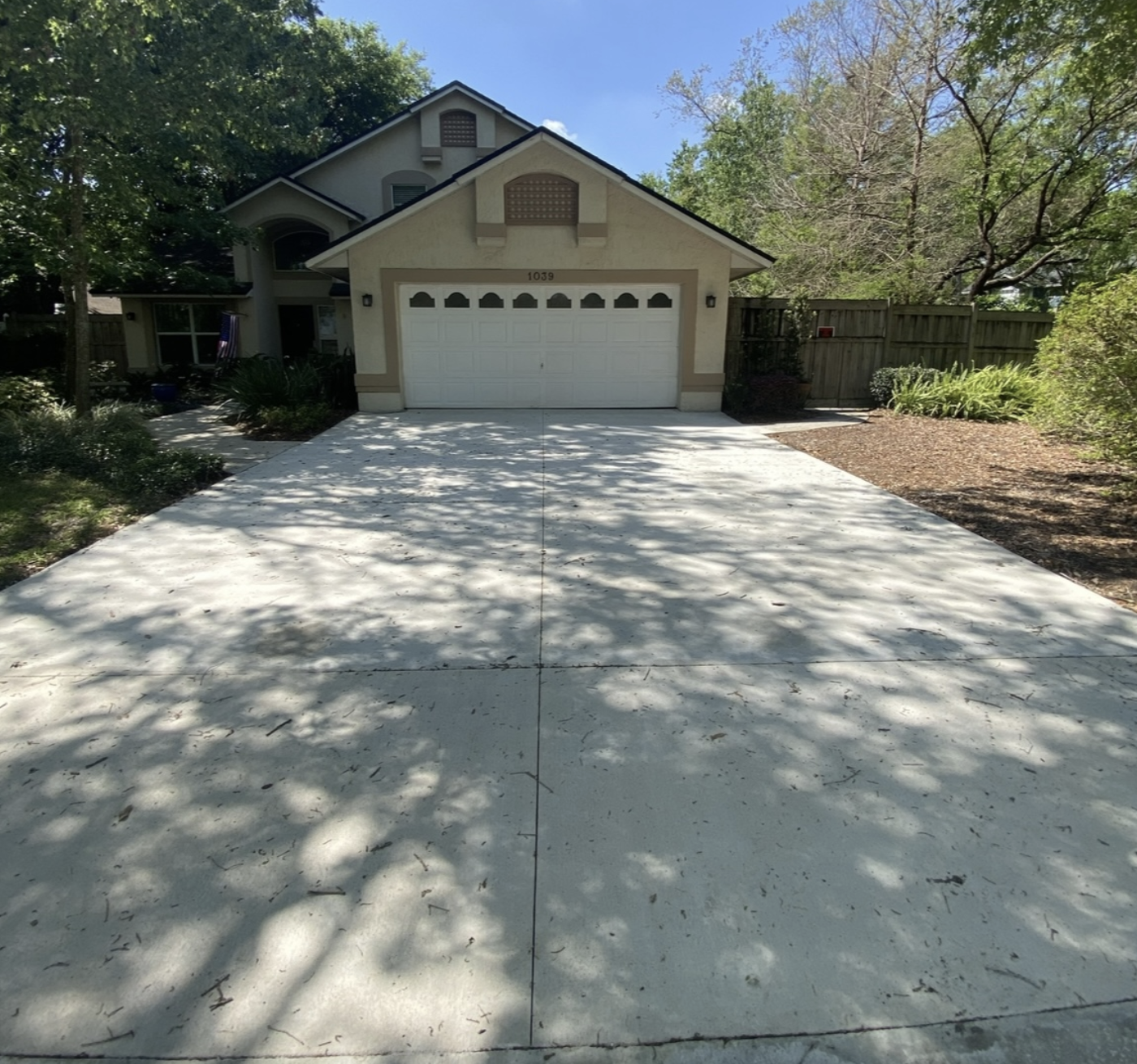
Installing a standard residential concrete driveway in typically ranges from $6.00 to $14.00 per square foot, depending on the total surface area. For a common 400-square-foot two-car driveway, total project costs average between $2,400 and $5,600. Prices approach the higher end of the scale if the layout requires thick, reinforced structural edges to safely support heavy trucks or recreational vehicles.
Patios and Pool Decks
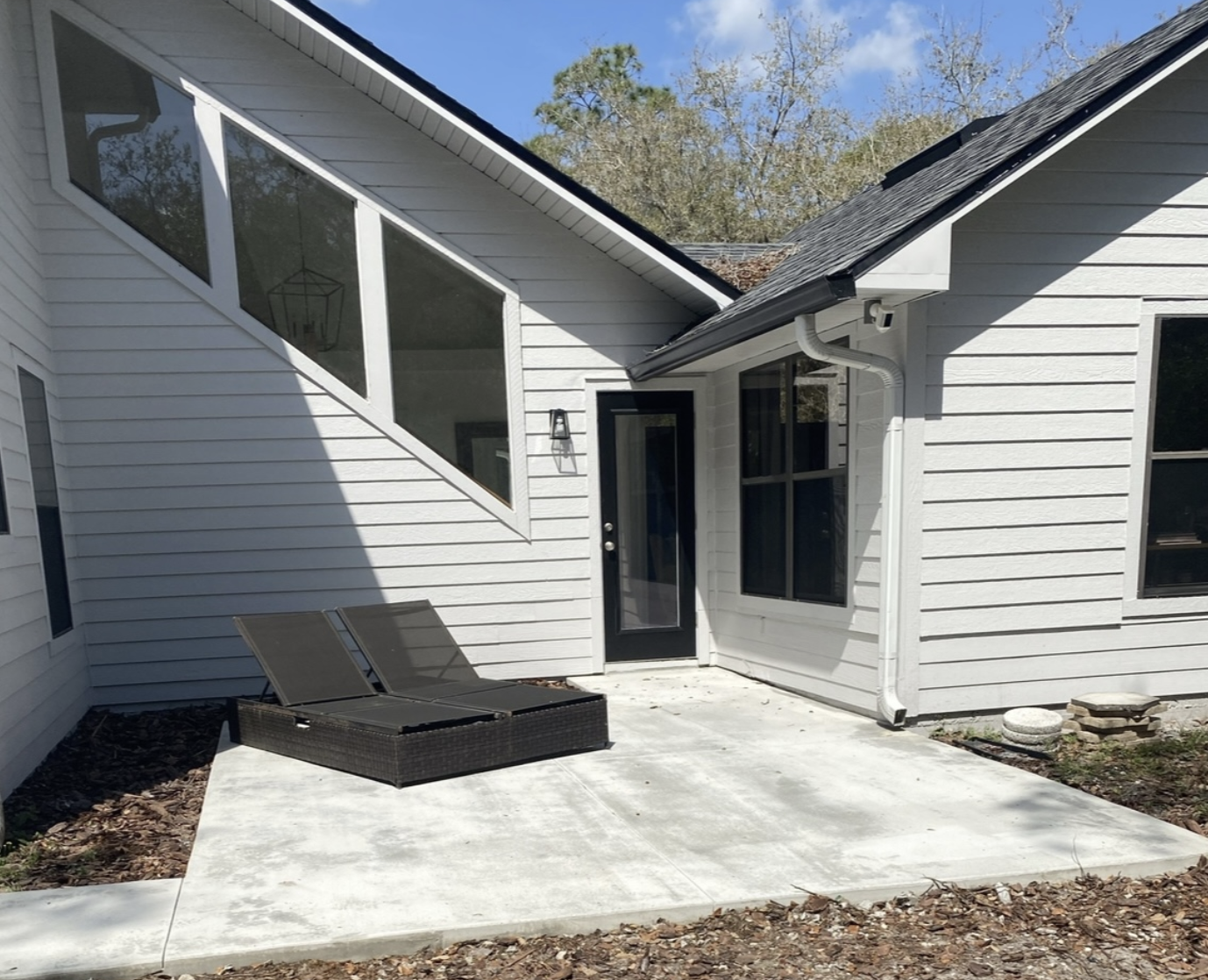
A flat, brushed concrete patio costs approximately $5.50 to $10.00 per square foot, providing an affordable extension for outdoor entertainment. However, because homeowners frequently upgrade to decorative pool surrounds, stamped or colored concrete is highly sought after. These premium aesthetic modifications introduce more labor-intensive hand-tooling, pushing the final cost to $9.00 to $16.50 per square foot.
Slabs and Building Foundations
Engineered slabs for home additions, sheds, or commercial storage buildings require meticulous leveling and precise moisture barriers to satisfy Florida building codes. A standard 4-inch thick reinforced slab runs $6.00 to $9.00 per square foot, while a heavy-duty 6-inch structural foundation spans $10.00 to $15.50 per square foot. The expanded pricing reflects the increased project volume and size, along with the precise alignment required for vertical wall framing.
Breakdown of Material vs. Labor Costs in Central Florida
A professional concrete quote is divided into raw material logistics and onsite physical labor to ensure a transparent financial breakdown. In the market, materials typically account for roughly 60% of the total quote, while professional placement, finishing, and overhead comprise the remaining 40%.
| Expense Category | Estimated Cost Range | What is Included |
| Material Expenses | $160 – $182 per cubic yard | Base ready-mix concrete pricing for 3,000 to 4,000 PSI mixes directly from the batch plant. |
| Sub-Base Installation | $10 – $25 per cubic yard | Sourcing, delivering, and compacting gravel or clean sand to ensure proper drainage in local soil. |
| Formwork & Reinforcement | $2.00 – $7.00 per linear foot | Timber boards, stakes, alignment strings, and structural steel rebar or wire mesh reinforcement. |
| Placement & Finishing Labor | $2.50 – $7.50 per square foot | On-site physical labor for pouring, screeding, professional troweling, and cutting control joints. |
| Pumping Service Rental | $115 – $150 per hour | Specialized boom or line pump equipment is required for properties with restricted truck access. |
Crucial Cost Factors Impacting Your Concrete Estimate
To avoid unexpected line items on a final bill, account for these specific operational variables that affect local concrete projects:
- Project Volume and Size: Ordering concrete in bulk generally yields a lower per-unit cost from ready-mix plants. However, if your project requires less than a full truckload (typically 10 cubic yards), suppliers will assess short load fees ranging from $40 to $110 per order to cover the cost of operating an under-filled vehicle.
- Delivery Distance and Site Logistics: The physical distance between the batch plant and your job site heavily impacts fuel surcharges. Orlando logistics can also complicate pricing if the pouring site is inaccessible to a heavy ready-mix truck, requiring specialized concrete pumping equipment rental ($115 to $150 per hour).
- Excavation and Formwork Complexity: Before a single drop of concrete is poured, the ground must be cleared of debris, roots, or old asphalt. Basic land excavation costs between $50 and $200 per cubic yard, while old concrete removal costs $2.00 to $6.00 per square foot.
- Market Demand and Fuel Prices: The commercial development boom across Central Florida maintains highly competitive asset scheduling. When local demand peaks or regional fuel prices fluctuate, delivery surcharges adjust accordingly across all residential or commercial applications.
- Budget Contingency for Unexpected Costs: Florida’s unpredictable afternoon thunderstorms can ruin an uncured pour, and shifting underground water tables can demand sudden structural revisions. Experienced project managers recommend maintaining a 10% to 15% financial buffer within the initial estimate to safely handle unforeseen material or labor overages.
Permitting and Building Code Costs
Navigating local building regulations is a mandatory step for any structural concrete installation in Central Florida. City and county municipalities require official building permits for new driveways, building foundations, and large structural slabs to ensure compliance with regional setback rules and stormwater runoff management. Failing to secure the appropriate paperwork before pouring concrete can result in costly stop-work orders, steep fines, and the potential forced demolition of unpermitted structures.
Local Regulatory Demands and Inspection Fees
On average, securing a residential concrete permit in the area costs between $100 and $350, depending on the total square footage and project scope. If your project involves a commercial application or a complex foundation layout, structural plan review fees and zoning engineering assessments can drive those administrative costs between $400 and $900+.
Property owners must also factor in the time and labor required for a professional contractor to manage the multi-stage inspection process—including pre-pour formwork validation and final structural sign-off—which is typically bundled into the final project management pricing.
- Zoning and Setbacks: Code compliance checks verify that your new slab does not encroach on property lines or local utility easements.
- Stormwater Runoff Permits: Large concrete surfaces reduce natural drainage area, frequently requiring approval for proper water displacement.
- Pre-Pour Inspection: Inspectors must examine the open formwork, subgrade compaction, and steel reinforcement placement before any concrete is poured.
- Final Sign-Off: A post-cure evaluation ensures the finished surface matches approved blueprints and adheres to safety codes.
DIY vs. Hiring a Professional Concrete Service
Attempting a do-it-yourself concrete pour can look like an attractive way to eliminate labor fees, but it introduces massive logistical and financial risks. Poured concrete is an unforgiving material with a highly volatile curing window; once the ready-mix truck arrives on-site, you have roughly 90 minutes to place, level, and finish the material before it hardens.
Without professional-grade tools, heavy equipment, and an experienced crew, DIYers frequently end up with unlevel surfaces, premature structural cracking, and cosmetic defects that permanently ruin the property’s curb appeal.
Value and Structural Guarantees
Hiring a professional concrete service ensures your project benefits from proper soil compaction, precise water-to-cement ratios, and code-compliant reinforcement. While a contractor estimation includes labor and overhead, professionals have the bulk buying power to secure competitive ready-mix concrete pricing and minimize structural waste.
Ultimately, paying for professional placement and finishing protects your investment with a structural warranty, saving you from the extreme expense of hiring a crew later to jackhammer and haul away a failed DIY attempt.
Estimate Your Concrete Project
Accurately calculating your expected expenses before contacting local ready-mix suppliers or installers prevents surprises and keeps your construction budget on track. To build a reliable preliminary estimate, you must determine the exact volume of material required, which is calculated based on the total square footage and the planned thickness of your slab. Property owners should convert these spatial dimensions directly into standard industry delivery metrics to accurately cross-reference local market pricing.
Calculating Your Spatial Volume for
To find the required material volume for your project, you multiply your length, width, and thickness in feet to establish the total cubic feet, and then convert that figure into standard ordering units. Because ready-mix plants sell material exclusively by the cubic yard, your total cubic feet must be divided by 27 to match commercial ordering systems. Once you have this final yardage figure, you can multiply it by the regional ready mix price of $160 to $182 per cubic yard while ensuring you add a 10% material waste buffer to account for uneven ground depths.
Conclusion
Investing in professional concrete services in Orlando, FL, requires balancing raw material costs, local labor rates, and specific Central Florida environmental challenges. From understanding fluctuating ready-mix concrete pricing to accounting for municipal permitting and site preparation, a well-researched budget is your best defense against unexpected project overruns. By analyzing your specific project tier and application requirements, you can approach local contractors with confidence and secure an accurate, competitive estimate.
Ultimately, high-quality concrete work adds long-term structural value, durability, and visual appeal to any residential or commercial property. Partnering with a licensed, insured local specialist ensures your project withstands Florida’s heavy rainfall and intense climate for decades to come. Ensure you secure multiple itemized bids, double-check your structural measurements, and maintain a healthy budget contingency to guarantee a seamless, successful installation from start to finish.
FAQ
How long does it take for a concrete driveway to cure?
A standard concrete driveway requires about seven days of curing before it can support passenger vehicles, and roughly 28 days to achieve full structural strength. Florida’s high humidity actually helps retain moisture during the critical early stages, but fresh installations must remain completely protected from heavy afternoon rainstorms for the first 24 to 48 hours.
Why is concrete cracking a common issue in Florida?
Concrete cracking across Central Florida stems primarily from high summer temperatures that cause the wet mixture to dry out too quickly during placement, leading to shrinkage. Additionally, the region’s shifting sandy soil and fluctuating water tables place continuous subterranean stress on unreinforced slabs, making proper sub-base compaction and strategic control joints absolutely vital.
What is the cheapest finish for a concrete pool deck?
A classic broom finish or a smooth trowel finish is the most economical option, as it is routinely included in the base concrete installation cost. Homeowners looking for a balance between affordability and heat resistance often opt for a standard knockdown texture, which remains far more cost-effective than elaborate stamped or hand-stained concrete designs.
How much is concrete per sq ft in Florida?
For basic plain concrete, homeowners typically pay between $5.50 and $10.50 per square foot for both materials and basic labor. Decorative modifications, complex site excavation, or a thicker structural foundation design will shift those baseline figures upward into the $11.00 to $19.00+ price bracket.
How much does it cost for a 40×60 concrete slab?
A massive 2,400-square-foot structural slab (such as a large workshop or commercial garage foundation) typically costs between $13,500 and $25,000. The final price depends on whether the project requires heavy rebar reinforcement, extensive land clearing, and a thicker 6-inch concrete profile to support heavy machinery load requirements.
How much does a cubic yard of concrete typically cost?
The standalone average cost of concrete in the area ranges from $140 to $182 per cubic yard delivered directly from a commercial plant. This baseline cost covers standard residential mix designs, while high-strength formulations or specialized chemical accelerators add to the core material expenses.
What factors most influence the price of concrete per job?
The primary variables driving a commercial quote are the overall project volume and size, the depth of initial land grading required, and overall site accessibility. Additional logistical elements—such as specialized equipment rentals and municipal administrative fees—further alter the final contract total.
Does the price of concrete include delivery?
Ready-mix concrete pricing generally includes standard delivery if the project location sits within a 15-to-20-mile radius of the batch plant. If the job site falls outside this operational boundary, or if the order volume fails to fill a standard truckload, suppliers routinely assess added delivery distance fees and short load surcharges.
Professional Concrete Services in Orlando, FL
Accu-Krete provides reliable concrete installation, repair, decorative concrete, patios, driveways, and sidewalk solutions for homeowners and businesses across Orlando and nearby areas.