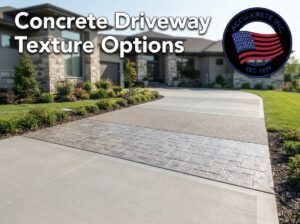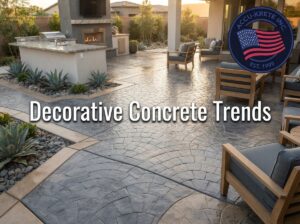
Choosing the right material for your driveway is a major decision that affects both the aesthetic appeal of your home and the long-term functionality of your entrance. Concrete has long been the preferred choice for driveways due to its durability, strength, and relatively low maintenance requirements compared to asphalt or pavers.
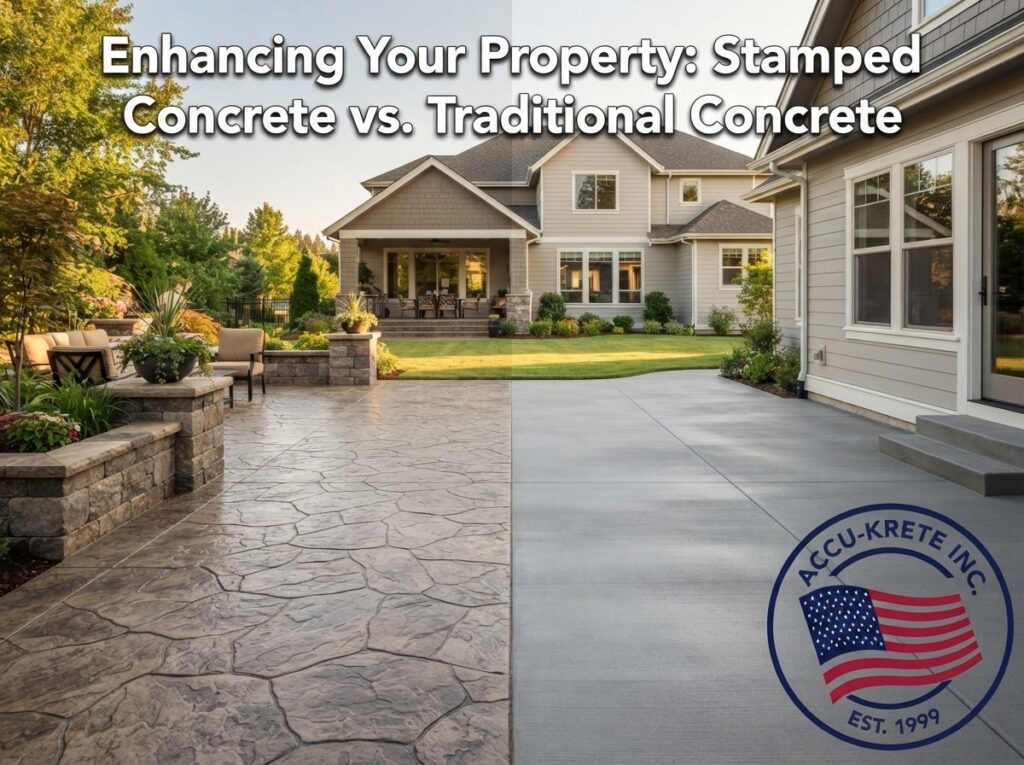
However, homeowners now face a choice between the classic, clean look of traditional broom-finished concrete and the decorative, high-end appearance of stamped concrete. While traditional concrete offers a timeless, functional surface that fits any budget, stamped concrete provides an opportunity to mimic the texture and patterns of expensive materials like stone, slate, or brick.
Stamped Concrete Driveways vs Traditional Concrete
The fundamental difference between stamped concrete and traditional concrete lies in their aesthetic versatility and the finishing process used during installation. Traditional concrete is poured, leveled, and finished with a broom or smooth surface, resulting in a plain, uniform look that emphasizes utility and affordability.
In contrast, stamped concrete involves pressing patterns and textures into the wet surface using specialized mats, followed by the application of colors to create realistic, custom designs. While the structural foundation for both materials is identical, stamped concrete is considered a decorative upgrade that adds significant curb appeal, whereas traditional concrete serves as a sturdy, reliable, and cost-effective workhorse.
The Timeless Appeal of Traditional Concrete
Traditional concrete driveways remain a popular choice because of their simple, clean aesthetic and long-standing reputation for performance. This style of driveway is highly valued for its ability to blend seamlessly into almost any landscaping design without drawing too much attention.
Because the installation process is straightforward, requiring only pouring, leveling, and a light broom finish, it is typically faster to complete and requires fewer specialized materials. The resulting surface is extremely durable, easy to clean, and provides excellent traction for vehicles, even in wet conditions.
The Decorative Versatility of Stamped Concrete
- Stamped concrete is a fantastic way to elevate the entrance of your home by providing the high-end look of natural materials without the associated maintenance headaches.
- Whether you want your driveway to look like weathered flagstone, classic brick, or modern geometric tile, stamping allows for near-infinite customization in both color and texture.
- This decorative approach adds character to your exterior, often increasing the perceived value and curb appeal of the property during a sale.
- However, the process is more labor-intensive, requiring skilled installers who can accurately apply colors and press patterns before the concrete sets.
- While the visual benefits are undeniable, it is important to remember that the decorative layer requires consistent maintenance to protect the finish.
- For those who want their driveway to be a design statement rather than just a functional path, stamped concrete offers unmatched aesthetic possibilities for your exterior design.
Important Factors for Long-Term Durability
Regardless of which style you choose, the long-term performance of your driveway depends on proper site preparation, reinforced subgrade, and adequate curing times. Both types of concrete are vulnerable to cracking if the ground beneath them is not properly compacted or if the concrete is poured too thin.
You must also consider the climate in your region; extreme temperatures can cause concrete to expand and contract, which can eventually lead to surface issues if control joints are not strategically placed. Regular maintenance for both styles includes cleaning away debris, addressing any small cracks immediately, and applying sealers to protect against moisture, chemicals, and staining.
Pattern Selection and Realism
Stamped concrete offers a wide range of patterns, from rustic cobblestone to elegant stone tiles, allowing you to match your home’s style. The level of realism depends on the quality of the stamps used, creating a sophisticated look that guests will admire.
Color Consistency and Application
Color is added to stamped concrete using hardeners and antique release agents, which create depth and natural-looking variations. While traditional concrete is typically gray, stamped surfaces can be tinted to match the exterior color palette of your house.
Surface Texture and Traction
Traditional concrete usually features a broom finish, which provides excellent grip and traction for tires and pedestrians. Stamped concrete can be textured, but you must ensure that the pattern allows for sufficient grip, especially in areas prone to wet or icy conditions.
Maintenance and Sealing Requirements
Both driveways require sealing, but stamped concrete needs more frequent re-application to keep the decorative colors vibrant and protected. Traditional concrete is easier to maintain, as it does not rely on a protective color layer to hide surface imperfections.
Installation Skill and Timeframe
Stamped concrete requires a higher level of professional skill and usually takes longer to complete due to the detailed stamping and coloring process. Traditional concrete is much quicker to install, making it the better option for projects with tight timelines.
Cost Considerations and Investment
Expect to pay a premium for stamped concrete due to the specialized labor, tools, and decorative materials involved. Traditional concrete is significantly more affordable, making it the standard choice for homeowners who want to balance cost with reliable, long-term durability.
The Role of Professional Installation
- Hiring an experienced contractor is perhaps the most important factor in achieving a successful driveway project, particularly when working with decorative options.
- A skilled team understands how to properly grade the site to prevent drainage issues, which is the leading cause of premature failure in concrete driveways.
- They also know how to calculate the correct timing for stamping, as the concrete must reach a specific hardness before the patterns can be applied effectively.
- Furthermore, a professional will understand how to place control joints in a way that minimizes visible cracking without ruining the visual flow of your chosen design.
- Investing in a team with a strong portfolio of finished projects gives you the confidence that your driveway will be structurally sound and beautifully executed, avoiding common mistakes that can lead to costly repairs later on.
Comparing Driveway Finishes
| Feature | Traditional Concrete | Stamped Concrete |
| Primary Look | Neutral, Clean, Standard | Decorative, Patterned, Custom |
| Installation Speed | Fast | Slower (Requires detailed work) |
| Material Cost | Economical | Higher Premium |
| Maintenance | Minimal | Moderate (Regular Sealing) |
| Durability | High | High (With proper sealing) |
| Resale Value | Standard | Potential Bonus (Curb Appeal) |
| Slip Resistance | Excellent (Broom finish) | Varies (Must be textured) |
| Crack Visibility | Standard (Joints manage this) | Can hide cracks in patterns |
| Design Flexibility | Limited to plain surfaces | Unlimited patterns and colors |
| Project Complexity | Low | High |
Essential Care for Every Driveway
Protecting your concrete driveway starts on day one by following the curing instructions provided by your installer to ensure the concrete reaches full strength. Once the driveway is fully cured, keep it clean by periodically sweeping away leaves and dirt that can trap moisture against the surface.
Avoid using harsh chemicals or ice-melting salts in the winter, as these can erode the surface of the concrete and damage the protective sealant layer. If you notice any small cracks, fill them quickly with a high-quality masonry sealant to prevent water from penetrating to the subgrade.
Regular Cleaning and Debris Removal
Keep your driveway clear of organic debris like grass clippings and leaves to prevent staining and moisture buildup. A simple rinse with a garden hose is usually enough to keep the surface looking fresh throughout the year.
The Importance of Annual Sealing
Applying a high-quality sealer once a year or every two years is vital for blocking out stains and weather damage. This is especially true for stamped concrete, as it keeps the colors protected and prevents the surface from looking worn.
Managing Stains and Chemical Spills
Oil leaks from vehicles should be cleaned up as soon as possible, as concrete is porous and will quickly absorb dark stains. Use a specialized concrete degreaser to lift these stains before they set deep into the material’s pores.
Addressing Cracks Early
Cracks are normal in concrete due to natural ground movement, but they shouldn’t be ignored. Fill small cracks with a flexible, concrete-matching sealant to prevent water from freezing inside them and expanding the damage further.
Winter Maintenance Practices
Avoid using heavy machinery or sharp tools like metal shovels to clear snow, as these can scratch your sealant or finish. Plastic shovels are much safer and will help preserve the longevity of your decorative concrete surfaces.
Professional Inspections
Every few years, it’s a good idea to have a professional examine the driveway for any signs of settling or structural shifting. They can catch issues before they escalate, ensuring your driveway remains a safe path for your vehicles and family.
Why Quality Workmanship Matters
- The beauty and longevity of a concrete driveway, whether traditional or stamped, ultimately come down to the quality of the work behind the scenes.
- A well-built base prevents sinking, while proper concrete mix ratios ensure a surface that resists flaking and cracking.
- The difference between a driveway that lasts for fifteen years and one that lasts for forty is almost always the care taken during the initial preparation and pouring stages.
- When you focus on hiring a company that prioritizes long-term quality over speed, you are making a smart decision that saves money in the long run.
- Quality workmanship also ensures that the final result meets your aesthetic expectations, providing a beautiful, durable entrance that you can feel proud of every time you return home to your property.
Conclusion
The choice between stamped and traditional concrete is ultimately a balance between your budget, your aesthetic preferences, and how much maintenance you are willing to perform. Traditional concrete offers a reliable, low-maintenance, and cost-effective surface that fits seamlessly into any design, while stamped concrete allows for artistic expression and a high-end look that can significantly enhance curb appeal.
Both options require a solid foundation, professional installation, and consistent care to perform well over the years. By understanding the distinct advantages and the maintenance needs of each style, you can make an investment that aligns perfectly with your home improvement goals. Remember that the value of a driveway lies not just in its appearance, but in its durability and the safety it provides for your vehicles and family.
FAQs
1. Is stamped concrete more prone to cracking than traditional concrete?
Both types of concrete are susceptible to cracking due to ground movement and temperature changes. However, stamped concrete patterns can sometimes help camouflage minor cracks, making them less noticeable than on a smooth, traditional surface.
2. Which driveway is easier to maintain?
Traditional concrete is generally easier to maintain because it does not require special color-enhancing sealers. Stamped concrete requires more frequent sealing to keep the patterns and colors looking fresh and protected from the elements.
3. Does stamped concrete get slippery?
It can be slippery if not finished correctly, but professional installers add slip-resistant additives to the sealer to create the necessary grip. Always discuss your concerns about traction with your contractor before they finish the surface.
4. How much more expensive is stamped concrete?
Stamped concrete usually costs more than traditional concrete due to the additional labor, decorative tools, and coloring materials required. The exact price gap depends on the complexity of the pattern and the number of colors used in the design.
5. How long does a concrete driveway usually last?
A well-constructed and properly maintained concrete driveway can last for 30 to 40 years or more. Following a regular schedule of sealing and crack maintenance is the best way to extend its lifespan significantly.
6. Can I resurface a traditional driveway into a stamped one?
Yes, you can have a concrete overlay or resurfacing done to add stamped patterns to an existing, sound traditional driveway. This is a common solution for homeowners who want a design update without removing the entire concrete slab.
7. Does the color of stamped concrete fade over time?
Colors can fade with exposure to harsh sunlight and heavy foot traffic, but regular re-sealing helps preserve the vibrancy of the pigments. High-quality professional sealers are designed to provide long-lasting UV protection for your colors.
8. Is it possible to change the color of concrete later?
Yes, you can apply concrete stains or dyes to change the color of existing concrete surfaces. This is a great way to refresh the look of your driveway without needing to tear out and replace the entire slab.
9. Can I shovel snow off a stamped driveway?
Yes, but you should use a plastic-edged shovel to avoid scratching the decorative finish or the sealer. Avoid using heavy-duty chemicals or harsh salt, as they can break down the surface and damage the decorative integrity.
10. What is the most important part of installation?
The most critical part is the subgrade preparation, which ensures a stable base that won’t shift or settle. Proper compaction and grading prevent the most common structural problems that can lead to large, unsightly cracks in your driveway.
Professional Concrete Services in Orlando, FL
Accu-Krete provides reliable concrete installation, repair, decorative concrete, patios, driveways, and sidewalk solutions for homeowners and businesses across Orlando and nearby areas.