
Concrete is known for its strength and long lifespan, but even this tough material can develop surface issues over time. One of the most common concerns homeowners notice is a white, chalky layer forming on driveways, patios, sidewalks, basement floors, or retaining walls. This is called efflorescence, and while it can look alarming, it is usually a cosmetic issue rather than a structural defect.
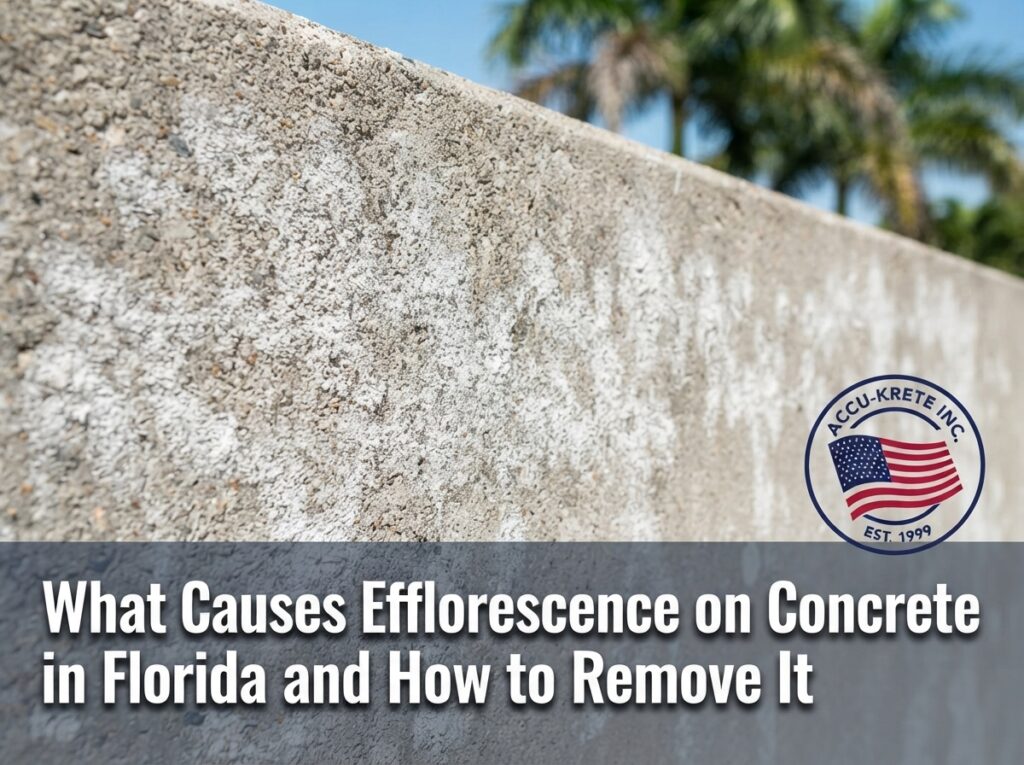
Efflorescence happens when moisture moves through concrete and brings natural salts to the surface. As the water evaporates, it leaves behind a white residue. This process is quite common in both new and older concrete surfaces, especially in areas exposed to rain, humidity, or poor drainage. Understanding this simple reaction is the first step in preventing future staining and keeping your concrete looking clean and well-maintained.
What Is Efflorescence?
Efflorescence is a white, powdery, or crystalline deposit that forms on the surface of concrete, brick, stone, and other masonry materials. It occurs when moisture moves through the concrete, dissolves naturally occurring mineral salts, and carries them to the surface.
As the water evaporates, the salts remain behind, creating a visible white residue. Although efflorescence is usually a cosmetic issue, it often indicates that excess moisture is passing through the concrete and should be properly managed.
Formation of Efflorescence
Efflorescence develops through a natural process that involves moisture, soluble salts, and evaporation. Concrete contains tiny pores and capillaries that allow water to travel through the material. As the moisture moves, it dissolves mineral salts that are naturally present in the cement, sand, and aggregates.
When the moisture reaches the concrete surface, it evaporates into the air. The dissolved salts cannot evaporate, so they crystallize on the surface and appear as a white powder or chalky coating. This process may repeat whenever moisture continues to move through the concrete.
Effects of Efflorescence on Concrete
Efflorescence is primarily a surface issue, but recurring white deposits can affect both the appearance and performance of concrete over time. While it does not usually reduce structural strength, it often indicates excess moisture that should be addressed to prevent further damage and maintain the concrete’s condition.
- Reduces visual appeal by leaving white, chalky stains on the concrete surface.
- Dulls decorative finishes, making stamped, stained, or colored concrete look faded.
- Indicates moisture problems that may be caused by poor drainage, leaks, or groundwater.
- Leads to recurring stains if the source of moisture is not properly controlled.
- Increases maintenance needs because affected surfaces require frequent cleaning and inspection.
Common Causes of Efflorescence on Concrete
Efflorescence develops only when specific conditions exist together. Concrete naturally contains mineral salts, and when water moves through its tiny pores, those salts dissolve and travel to the surface. As the moisture evaporates, it leaves the minerals behind, creating the familiar white residue. Understanding each stage of this process makes it easier to identify why efflorescence occurs and how it can be reduced or prevented.
The Science Behind Efflorescence
Efflorescence is both a physical and chemical process. Concrete contains microscopic capillaries that allow moisture to travel from inside the slab to the outer surface. As this moisture moves, it dissolves naturally occurring salts present in the cement paste and aggregates. These dissolved minerals remain suspended in the water until they reach the surface.
Once the water is exposed to air, it evaporates because of sunlight, wind, or warm temperatures. Unlike water, the dissolved salts cannot evaporate, so they crystallize on the surface as a white powder or chalky film. The process may repeat whenever new moisture enters the concrete, making efflorescence return if the source of water is not controlled.
Presence of Soluble Salts in Concrete
Concrete is made from cement, sand, aggregates, and water, all of which naturally contain small amounts of soluble mineral salts. These salts remain locked inside the hardened concrete and usually cause no visible problems while the concrete stays dry. However, they become active when water dissolves them and carries them through the concrete.
The amount of soluble salts can vary depending on the quality of the raw materials and the surrounding environment. In some cases, groundwater, soil, irrigation water, or deicing chemicals introduce additional salts into the concrete over time. When these minerals combine with moisture movement, the likelihood of visible efflorescence increases significantly.
Moisture Movement Through Concrete
Moisture is the most important factor in the formation of efflorescence. Even though concrete appears solid, it contains thousands of tiny pores that absorb and transport water. Rainfall, groundwater, plumbing leaks, excessive humidity, sprinkler systems, and poor drainage all provide moisture that can penetrate these small openings.
As water travels upward through the concrete, it dissolves the soluble salts stored inside the material. The greater the amount of moisture moving through the slab, the more salts are carried to the surface. Cracks, porous concrete, and improper curing can make moisture movement even easier, increasing the chances of recurring efflorescence.
Evaporation and Salt Crystallization on Surface
After moisture reaches the outer layer of the concrete, evaporation begins. Warm weather, direct sunlight, and moving air speed up this drying process. While the water disappears into the atmosphere, the dissolved salts remain on the concrete because minerals cannot evaporate.
Over time, these minerals harden into white crystalline deposits or a chalk-like powder that covers the surface. Repeated cycles of wetting and drying can produce new layers of efflorescence, especially in areas exposed to regular rain or excess moisture. Although these deposits are mostly cosmetic, heavy buildup can affect the appearance of decorative or colored concrete finishes.
Role of Calcium Hydroxide (Lime) in Cement
One of the primary minerals involved in efflorescence is calcium hydroxide, commonly called free lime. This compound forms naturally during cement hydration when water reacts with cement particles. Fresh concrete contains a relatively high amount of calcium hydroxide, making new installations more susceptible to efflorescence during the curing period.
As moisture carries calcium hydroxide toward the surface, it reacts with carbon dioxide in the air. This chemical reaction forms calcium carbonate, which appears as the white deposits commonly seen on concrete surfaces. As concrete continues to cure and the available lime decreases, efflorescence often becomes less noticeable, especially if moisture intrusion is minimized through proper drainage and maintenance.
Types of Efflorescence
Not every case of efflorescence develops under the same conditions. The timing of its appearance and the source of moisture determine the type of efflorescence affecting the concrete. Identifying whether it is primary or secondary helps determine the most effective prevention and maintenance strategy.
Primary Efflorescence
Primary efflorescence develops during the early curing stage of newly poured concrete. As excess water leaves the slab, it carries naturally occurring salts to the surface, where they remain after evaporation. This type is common on new driveways, sidewalks, patios, and concrete floors and often decreases naturally as the concrete dries and matures.
Secondary Efflorescence
Secondary efflorescence appears after concrete has fully cured and is usually caused by external moisture sources. Poor drainage, leaking pipes, groundwater, irrigation systems, or frequent rainfall allow water to repeatedly enter the concrete and transport salts to the surface. Unlike primary efflorescence, this type often returns until the underlying moisture problem is resolved, making proper water management essential for long-term prevention.
How to Identify Efflorescence vs. Other Stains
Efflorescence can easily be mistaken for other types of concrete stains, making proper identification an important first step before attempting any cleaning or repair. Unlike oil, rust, mold, or hard water stains, efflorescence is caused by moisture carrying soluble salts to the concrete surface.
It typically appears as a white, chalky, or powder-like residue that can often be brushed away when dry. Correctly identifying the stain helps you choose the right treatment method and prevents unnecessary cleaning techniques that may damage the concrete or fail to solve the underlying moisture issue.
| Type of Stain | Appearance | Main Cause | Easy Identification |
| Efflorescence | White, powdery, or crystalline residue | Moisture carrying soluble salts to the surface | Usually brushes off easily and may return if moisture remains. |
| Rust Stains | Orange, reddish-brown marks | Rusting metal or iron deposits | Usually forms near metal fixtures or reinforcing steel. |
| Oil Stains | Dark brown or black patches | Vehicle leaks, machinery, or grease | Absorbs into concrete and leaves greasy spots. |
| Mold and Mildew | Green, black, or dark brown growth | Damp, shaded, humid conditions | Often has a musty smell and may feel slimy. |
| Hard Water Stains | White or gray mineral deposits | Repeated water exposure with high mineral content | Usually forms below sprinklers, faucets, or drainage areas. |
| Paint or Chemical Stains | Varies depending on the material | Paint spills, chemicals, or construction materials | Often does not brush away and requires specialized cleaners. |
How to Remove Efflorescence from Concrete
The best way to remove efflorescence depends on how severe the deposits are. Light surface buildup can often be removed using a stiff nylon brush or dry broom, while moderate deposits may require rinsing with clean water and allowing the concrete to dry completely. For stubborn or recurring efflorescence, a concrete-safe efflorescence remover or a mild masonry cleaner can help dissolve the mineral deposits without damaging the surface when used according to the manufacturer’s instructions.
Although cleaning removes the visible white residue, it does not eliminate the underlying cause. If moisture continues moving through the concrete, the efflorescence will likely return. Repairing drainage problems, sealing cracks, reducing water exposure, and applying a breathable concrete sealer after the surface has completely dried are important steps for preventing future salt deposits.
How to Prevent Efflorescence on Concrete
Preventing efflorescence starts with controlling moisture and reducing the movement of soluble salts within the concrete. Good construction practices, quality materials, and regular maintenance work together to minimize the conditions that allow white mineral deposits to form. Addressing moisture issues early not only prevents recurring efflorescence but also helps preserve the appearance and durability of concrete surfaces.
- Ensure proper drainage by directing rainwater away from concrete surfaces and preventing standing water around foundations, patios, and driveways.
- Apply a breathable concrete sealer after the concrete has fully cured to reduce water absorption while allowing trapped moisture to escape.
- Use low-alkali cement and quality construction materials to minimize the amount of soluble salts present in the concrete mix.
- Follow correct curing practices, including maintaining the proper water-to-cement ratio and allowing adequate curing time to produce denser, less porous concrete.
- Repair cracks promptly to prevent water from penetrating deeper into the concrete.
- Maintain gutters, downspouts, and irrigation systems to avoid unnecessary water exposure.
- Inspect concrete regularly for signs of moisture intrusion, damaged sealers, or drainage problems so issues can be corrected before efflorescence develops.
Conclusion
Efflorescence is a common concrete issue caused by the movement of moisture and soluble salts through the surface. Although the white, powdery deposits are usually cosmetic, they often indicate that water is passing through the concrete. Understanding the causes of efflorescence helps homeowners and property managers address the source of the problem instead of only removing the visible stains.
Proper drainage, quality construction materials, correct curing practices, and routine maintenance are the most effective ways to reduce the risk of efflorescence. By controlling moisture and protecting concrete surfaces with appropriate sealers, you can preserve both the appearance and durability of driveways, patios, sidewalks, foundations, and other concrete structures for years to come.
FAQs
Does efflorescence go away on its own?
Light efflorescence may gradually fade as the available salts are depleted and the concrete dries. However, it can return if excess moisture continues to move through the concrete.
Can efflorescence damage concrete over time?
Efflorescence itself is generally not harmful to concrete. However, persistent efflorescence often indicates ongoing moisture problems that may contribute to surface deterioration if left untreated.
What is the best sealer to prevent efflorescence?
A breathable penetrating concrete sealer, such as a silane- or siloxane-based sealer, is one of the best options because it reduces water absorption while allowing trapped moisture vapor to escape.
Is efflorescence a sign of water leakage?
Not always, but recurring efflorescence is a strong indication that moisture is entering or moving through the concrete. The moisture may come from rainwater, groundwater, poor drainage, plumbing leaks, or high humidity.
How long does efflorescence take to appear?
Efflorescence can appear within a few days or several weeks after new concrete is poured, depending on curing conditions and moisture levels. It can also develop years later if water begins penetrating older concrete.
What is the meaning of efflorescence in concrete?
Efflorescence in concrete refers to the white, powdery mineral deposits that form when water carries soluble salts to the surface and evaporates. It is a common sign of moisture movement rather than a structural defect in the concrete.
Professional Concrete Services in Orlando, FL
Accu-Krete provides reliable concrete installation, repair, decorative concrete, patios, driveways, and sidewalk solutions for homeowners and businesses across Orlando and nearby areas.