Concrete surfaces can become uneven over time, even if they were installed correctly. Soil beneath the concrete may shift, wash away, or settle because of moisture changes, poor drainage, or natural ground movement. As a result, driveways, sidewalks, patios, garage floors, and other concrete slabs can sink, creating trip hazards, drainage issues, and an uneven appearance.
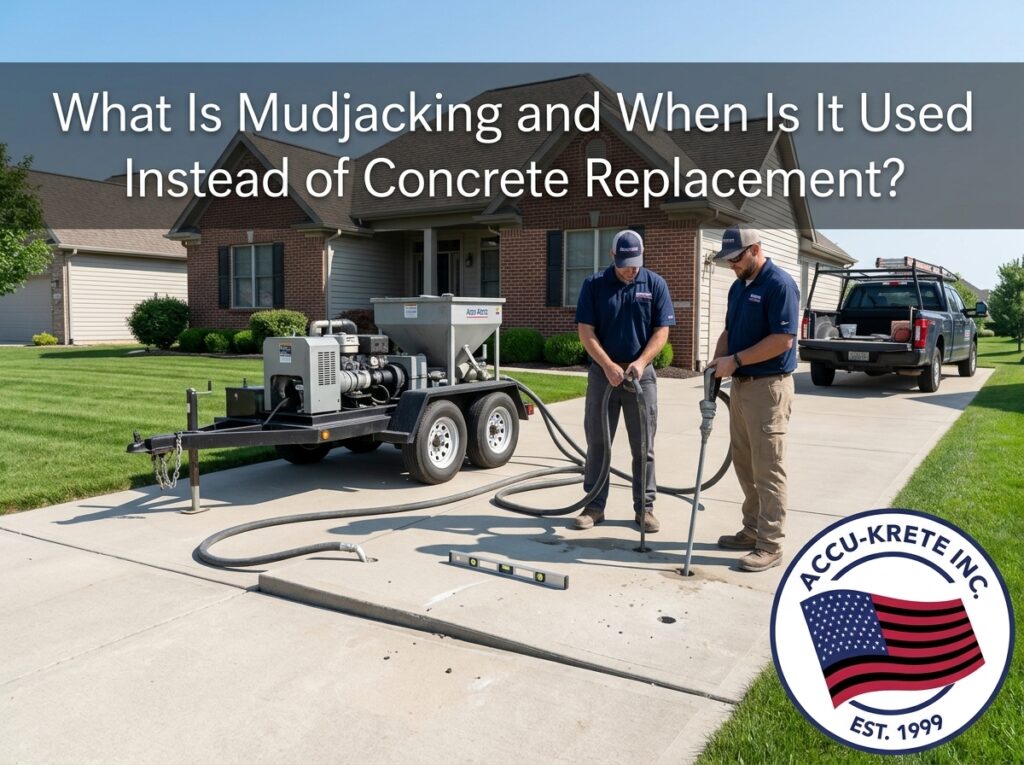
Mudjacking is a cost-effective concrete leveling method that raises sunken slabs without removing or replacing the existing concrete. By pumping a specialized grout mixture beneath the slab, the empty spaces are filled and the concrete is carefully lifted back into place. In this guide, you’ll learn what mudjacking is, how the process works, its benefits and limitations, and when it’s the best solution for repairing uneven concrete.
What Mudjacking Actually Is — and What It Isn’t
Mudjacking, also known as slab jacking or concrete lifting, is a concrete repair technique used to raise sunken concrete by pumping a cement-based slurry beneath the slab. As the material fills empty spaces under the concrete, it creates pressure that gradually lifts the slab back to its original height.
Unlike complete concrete replacement, mudjacking preserves the existing slab, making it a faster, less disruptive, and more cost-effective solution when the concrete remains structurally sound. However, mudjacking is not designed to repair severely cracked, broken, or deteriorated concrete. It solves settlement problems caused by unstable soil rather than structural damage, making it ideal for slabs that have sunk but are otherwise in good condition.
How the Mudjacking Process Works, Step by Step
Mudjacking follows a carefully planned process that restores uneven concrete with minimal disruption. Every stage is performed with precision to ensure the slab is lifted evenly while preventing additional damage. From inspecting the affected area to injecting the lifting material and sealing the finished surface, each step plays an important role in achieving a stable, long-lasting repair.
Step 1 — Assessment and Drill Hole Mapping
Every mudjacking project starts with a detailed inspection of the concrete slab. Contractors check how much the slab has settled, look for visible cracks, and inspect the surrounding soil for issues like erosion or poor compaction. This assessment helps determine whether the slab is suitable for mudjacking.
After the inspection, technicians mark the drill hole locations. The holes are placed carefully to ensure the slurry spreads evenly beneath the slab. Proper planning allows for a smooth, accurate lift while reducing the risk of uneven leveling.
Step 2 — Drilling Into the Settled Concrete
Once the layout is complete, small holes are drilled through the concrete slab. These holes provide access for pumping the mudjacking slurry underneath the concrete. Their size and spacing depend on the slab and the amount of settlement.
After drilling, all dust and debris are cleaned from the holes. This ensures the slurry flows freely beneath the slab. The holes will be patched later, leaving a clean and professional finish.
Step 3 — Pumping the Slurry Under the Slab
Next, a cement-based slurry is pumped beneath the slab through the drilled holes. The mixture fills empty spaces under the concrete and gradually lifts the slab back to its original level. Contractors monitor the lifting process carefully to achieve accurate results.
As the voids fill, the concrete rises evenly without causing unnecessary stress. Once the slab reaches the desired height, pumping stops immediately. The hardened slurry provides solid support and helps reduce future settlement.
Step 4 — Patching Holes and Finishing the Surface
After the concrete is fully leveled, the drilled holes are filled with a durable cement-based patching material. The patches are smoothed to blend with the surrounding surface, improving the overall appearance of the repaired slab.
Finally, contractors inspect the repaired area to confirm it is level and stable. The worksite is cleaned, and the concrete is ready for use after a short curing period. In many cases, foot traffic can return the same day.
Surfaces Mudjacking Can Fix
Mudjacking is an effective concrete leveling solution for many residential, commercial, and industrial surfaces that have settled due to soil movement or erosion. As long as the concrete slab is structurally sound, mudjacking can lift it back to its original position without the cost and disruption of full replacement. It helps restore safety, improve drainage, eliminate trip hazards, and extend the lifespan of existing concrete.
Common concrete surfaces that mudjacking can fix include:
- Concrete driveways with sunken or uneven sections
- Sidewalks and walkways that create trip hazards
- Concrete patios affected by soil settlement
- Garage floors that no longer align with the driveway
- Pool decks with uneven or sinking slabs
- Front steps and porch slabs that have settled over time
- Concrete stoops and entryways requiring leveling
- Basement floors with minor slab settlement
- Warehouse and commercial floors needing a level working surface
- Loading docks with uneven concrete slabs
- Factory and industrial concrete floors affected by soil movement
- Concrete pathways and garden walkways with sinking sections
Signs Your Concrete Needs Mudjacking
Sunken concrete rarely happens overnight. In most cases, the warning signs develop gradually as the soil beneath the slab shifts, erodes, or settles over time. Identifying these early symptoms can help you repair the problem before it becomes more expensive or creates safety hazards.
If your concrete is still structurally sound but no longer sits evenly, mudjacking may be an effective solution to restore its original position. Below are the most common signs that indicate your concrete may need professional lifting.
One Slab Panel Sitting Lower Than the Next
One of the most obvious signs that you need mudjacking is when one concrete slab sits lower than the one beside it. This uneven surface usually develops because the soil underneath has settled, eroded, or washed away. It is a common problem on driveways, sidewalks, patios, and garage floors.
A sunken slab can create trip hazards, poor drainage, and extra stress on nearby concrete panels. If the concrete is still structurally sound, mudjacking can lift the lower slab back into place without the need for full replacement.
Water Pooling on a Surface That Used to Drain
If water starts collecting on concrete that previously drained properly, it may be a sign that the slab has settled. Standing water can gradually weaken the soil underneath and increase the risk of further settlement or concrete damage.
Mudjacking restores the slab’s original slope by raising the sunken section. This improves drainage, prevents water pooling, and helps protect nearby foundations and landscaping from excess moisture.
Cracks Wider Than ¼ Inch
Small hairline cracks are normal in concrete, but cracks wider than ¼ inch often indicate that the slab has shifted because of unstable soil. These larger cracks may allow water to seep underneath the concrete, leading to further erosion and settlement.
If the cracks are caused by uneven settling rather than severe structural damage, mudjacking can stabilize the slab by filling the voids below it. However, heavily damaged or broken concrete may require complete replacement instead.
A Slab That Rocks or Shifts When You Step on It
Concrete should feel firm and stable when you walk on it. If a slab rocks or moves under pressure, it usually means there are empty spaces beneath it caused by soil erosion or poor compaction.
Mudjacking fills these underground voids with a strong cement-based slurry, providing solid support beneath the slab. Once lifted and stabilized, the concrete becomes safer, more level, and less likely to move or settle further.
Mudjacking vs. Polyjacking — Which Method Is Right for Your Project
Both mudjacking and polyjacking are effective concrete leveling methods used to lift sunken concrete slabs without replacing them. Mudjacking uses a cement-based slurry, making it a more affordable option for larger surfaces like driveways, sidewalks, patios, and garage floors.
Polyjacking uses lightweight polyurethane foam that cures faster, requires smaller injection holes, and works well in areas with unstable soil or where quick use of the surface is important. While polyjacking typically costs more, it offers greater precision and faster results. The best choice depends on your budget, soil conditions, project size, and long-term repair goals.
| Feature | Mudjacking | Polyjacking |
| Lifting Material | Cement-based slurry | Polyurethane foam |
| Cost | Lower | Higher |
| Weight | Heavier | Lightweight |
| Cure Time | Several hours | About 15–30 minutes |
| Hole Size | Larger drill holes | Smaller drill holes |
| Best For | Large residential slabs | Precision lifting and weak soils |
Mudjacking Cost — What to Expect
The cost of mudjacking depends on several factors, including the size of the concrete slab, the extent of settlement, the amount of slurry required, and the accessibility of the repair area. In most cases, mudjacking is significantly more affordable than replacing concrete because it restores the existing slab instead of removing and pouring new concrete.
While the exact price varies by location and project complexity, understanding the factors that influence cost can help you plan your budget.
Factors that affect mudjacking cost include:
- Size of the concrete slab – Larger slabs require more material and labor.
- Amount of settlement – Severely sunken slabs need more lifting material.
- Project location – Labor and material costs vary by region.
- Accessibility – Hard-to-reach areas may increase labor time and equipment costs.
- Condition of the existing concrete – Minor cracks are usually repairable, but severely damaged slabs may require replacement.
- Additional repairs – Fixing drainage issues or stabilizing the soil can increase the overall project cost but helps prevent future settlement.
- Contractor experience – Skilled professionals may charge more but often deliver longer-lasting and more accurate results.
How Long Does Mudjacking Last?
When performed correctly on structurally sound concrete, mudjacking can last 10 to 20 years or longer. The longevity of the repair depends largely on the stability of the underlying soil, proper drainage, weather conditions, and the quality of the original installation. If the conditions that caused the settlement—such as poor drainage or soil erosion—are corrected, the repaired slab can remain level for many years.
Routine maintenance also plays an important role in extending the lifespan of mudjacked concrete. Preventing water from collecting around slabs, maintaining proper grading, and addressing drainage issues early help minimize soil movement beneath the concrete. Periodic inspections allow homeowners to identify small problems before significant settlement occurs again.
Mudjacking Pros and Cons
Like any concrete repair method, mudjacking offers several benefits as well as a few limitations. Understanding both helps determine whether it is the best solution for your specific project.
Pros
- Costs considerably less than complete concrete replacement.
- Preserves the existing concrete slab.
- Restores uneven concrete quickly with minimal disruption.
- Improves safety by eliminating trip hazards.
- Helps restore proper drainage on driveways, sidewalks, and patios.
- Can often be completed in just a few hours.
- Environmentally friendly because it reuses existing concrete instead of replacing it.
Cons
- Not suitable for severely cracked or structurally damaged concrete.
- Uses a heavier cement slurry than polyurethane foam.
- Larger drill holes remain visible after patching.
- May not solve ongoing settlement if drainage or soil problems remain untreated.
- Can require additional maintenance if underlying ground conditions continue to change.
Overall, mudjacking remains one of the most reliable and cost-effective solutions for lifting settled concrete. When performed by experienced professionals and combined with proper drainage improvements, it can restore both the appearance and functionality of concrete surfaces while extending their service life for many years.
Conclusion
Mudjacking is a practical and cost-effective solution for lifting sunken concrete without the expense and disruption of full replacement. By filling the voids beneath a slab with a cement-based slurry, this proven concrete leveling method restores uneven surfaces, improves safety, and extends the lifespan of driveways, sidewalks, patios, garage floors, and other concrete structures. When performed on structurally sound concrete, mudjacking delivers reliable, long-lasting results.
Choosing the right repair method depends on the condition of your concrete and the cause of the settlement. A professional inspection can determine whether mudjacking is the best option or if another repair approach is needed. Addressing soil movement and drainage issues alongside the repair also helps reduce the risk of future settlement and maximizes the life of the restored concrete.
Frequently Asked Questions
Is mudjacking the same as slabjacking?
Yes. Mudjacking and slabjacking are two names for the same concrete lifting process that raises sunken slabs by injecting a cement-based slurry beneath them.
Can mudjacking be used to fix a foundation?
Mudjacking is generally used for concrete slabs such as driveways, sidewalks, patios, and garage floors. Structural foundation problems usually require specialized foundation repair methods rather than mudjacking.
How long does mudjacking take to cure?
Most mudjacking projects cure within a few hours, allowing light foot traffic the same day. Vehicle traffic is often possible within 24 hours, depending on the materials used and site conditions.
How much does mudjacking cost per square foot?
Mudjacking typically costs $3 to $8 per square foot, although prices vary based on slab size, settlement depth, project complexity, and local labor rates.
Does mudjacking work in cold weather?
Yes, mudjacking can be performed in cooler weather as long as temperatures remain suitable for the cement-based slurry to cure properly. Extremely cold or freezing conditions may delay the process.
Is mudjacking worth it compared to full replacement?
If the concrete is structurally sound, mudjacking is often worth the investment because it costs less, requires less downtime, and restores the existing slab instead of replacing it entirely.
Professional Concrete Services in Orlando, FL
Accu-Krete provides reliable concrete installation, repair, decorative concrete, patios, driveways, and sidewalk solutions for homeowners and businesses across Orlando and nearby areas.