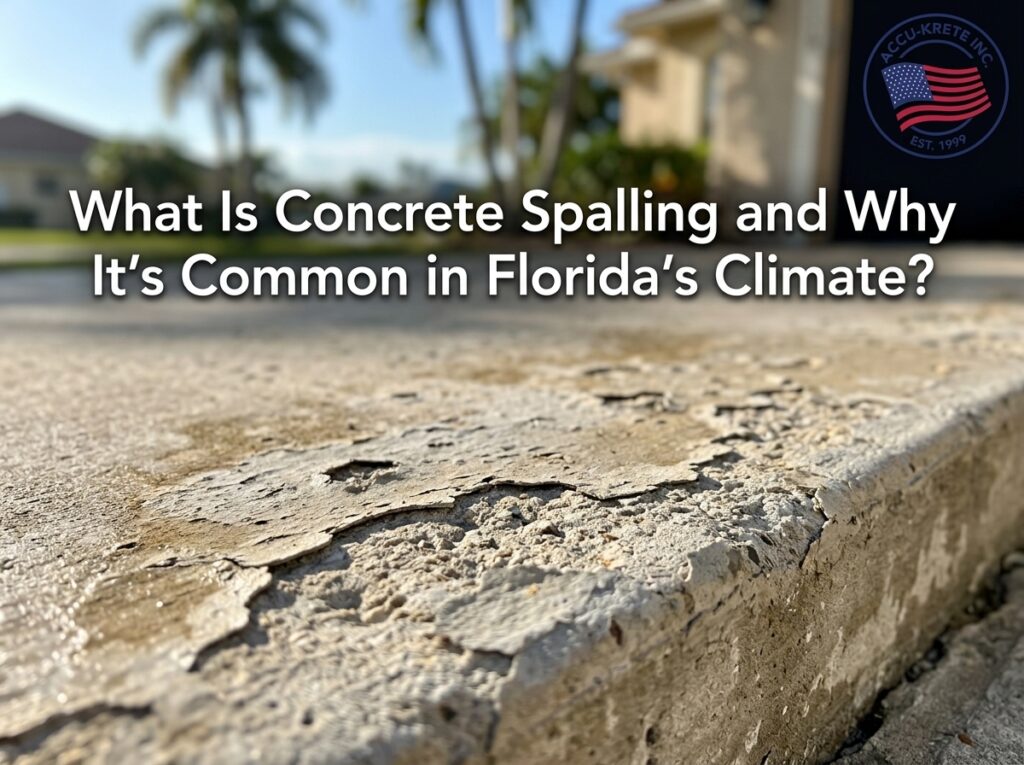
Concrete is known for its strength and durability, but even the toughest concrete surfaces can develop problems over time. One of the most common forms of concrete deterioration is concrete spalling, a condition that causes the surface of concrete to chip, flake, peel, or break apart. While it may begin as a minor cosmetic issue, spalling can gradually affect the appearance, performance, and lifespan of a concrete slab if left untreated.
Whether it appears on a driveway, patio, sidewalk, pool deck, or other concrete surface, spalling is often a sign that moisture, poor installation, or structural stress has started affecting the material. Understanding the signs of concrete spalling, its causes, and the risks involved can help property owners take action before minor concrete surface damage develops into costly repairs or concrete replacement.
What Concrete Spalling Looks Like
Concrete spalling is a form of surface deterioration that occurs when the outer layer of concrete begins to break away. The damage can range from small surface imperfections to larger areas where chunks of concrete have detached from the slab. In many cases, the issue starts gradually, making it easy to overlook during routine concrete maintenance.
One of the earliest signs of concrete spalling is the appearance of small pits or pop-outs in concrete. These shallow defects may seem harmless at first, but they often indicate that the surface has weakened. As the condition progresses, the concrete may begin showing flaking concrete, scaling concrete, or surface peeling concrete. The affected area often feels rough and uneven compared to the surrounding surface.
Common Signs of Concrete Spalling
Property owners should watch for several warning signs that may indicate developing concrete defects:
- Chipping concrete along edges and corners
- Surface scaling that causes the top layer to peel away
- Pitting concrete that creates small holes in the surface
- Crumbling concrete edges around driveways and walkways
- Hollow-sounding concrete when tapped
- Aggregate exposure where stones become visible
- Discoloration caused by trapped moisture
- Surface cracking accompanied by material loss
The presence of these symptoms usually indicates that the concrete surface has started breaking down. While some forms of damage remain superficial, others may signal deeper structural concerns.
Concrete Spalling vs Cracking
Many people confuse concrete spalling vs cracking because both involve visible damage to a concrete slab. However, they are different problems that require different repair approaches.
Concrete cracking occurs when the slab develops visible lines or separations due to shrinkage, settlement, temperature changes, or structural movement. In many cases, the surface remains intact despite the crack.
Concrete spalling, on the other hand, involves actual loss of material. Pieces of the surface break away, leaving behind pits, flakes, or exposed aggregate. Although cracks can contribute to spalling by allowing water penetration, not all cracks result in spalling.
Early-Stage vs Advanced Damage
Concrete spalling often begins as a minor surface issue but can quickly progress if left untreated. Recognising the difference between early-stage concrete spalling and advanced concrete damage helps property owners address repairs before the deterioration affects the strength, durability, and safety of the structure.
| Early-Stage Concrete Damage | Advanced Concrete Damage |
| Small pop-outs, light pitting, or minor surface scaling. | Large sections of concrete break away, leaving deep voids. |
| Damage is limited to the outer surface of the concrete. | Concrete delamination develops, creating hollow areas beneath the surface. |
| Mainly affects appearance with little impact on structural performance. | Structural integrity can be compromised if repairs are delayed. |
| Easier and less expensive to repair with surface restoration methods. | Often requires extensive concrete repair or partial replacement. |
| Reinforcing steel remains fully covered and protected. | Exposed rebar allows moisture to reach the steel, increasing the risk of corrosion and further structural concrete damage. |
The Main Causes of Concrete Spalling
Concrete spalling does not happen without a reason. In most situations, the visible damage is the result of underlying issues that have been affecting the concrete for months or even years. Identifying concrete spalling causes is essential because successful repairs depend on addressing the source of the problem rather than simply repairing the surface.
Moisture Intrusion and Water Penetration
Moisture intrusion is one of the leading causes of concrete spalling. Although concrete appears solid, it contains tiny pores that allow water to enter over time. When water penetration occurs repeatedly, the internal structure of the concrete begins to weaken.
Moisture can enter through:
- Hairline cracks
- Unsealed concrete surfaces
- Damaged joints
- Poor drainage systems
- Surface defects and imperfections
Once water reaches deeper layers of the slab, it contributes to concrete moisture damage and accelerates concrete deterioration. Repeated wetting and drying cycles place stress on the material and gradually reduce its durability.
Rebar Corrosion and Rusting Rebar
Reinforced concrete relies on steel bars, commonly known as rebar, to improve strength and load resistance. However, when moisture reaches the reinforcing steel, corrosion can begin.
Rebar corrosion is one of the most serious causes of concrete spalling. As rust develops, the steel expands. This expansion creates internal pressure within the concrete slab. Over time, the pressure forces the surrounding concrete to crack, separate, and eventually break away.
Common signs of rusting rebar include:
- Rust-colored stains on the surface
- Cracks running parallel to reinforcement
- Exposed rebar within damaged areas
- Deep spalling around structural sections
If corrosion continues unchecked, structural integrity can be compromised and the load-carrying capacity of the concrete may be reduced.
Poor Concrete Installation
Many cases of premature concrete surface damage can be traced back to installation mistakes. Even high-quality materials can fail when proper construction practices are not followed. Common installation-related problems include:
- Excess water added to the concrete mix
- Improper finishing techniques
- Insufficient curing time
- Inadequate concrete cover over reinforcing steel
- Poor joint placement
These issues can create weak surface layers that are more vulnerable to chipping concrete, scaling, and long-term degradation.
Concrete Mix Problems
The quality of the original concrete mix plays a major role in determining the lifespan of a concrete slab. Poorly designed mixes may contain incorrect water-to-cement ratios or insufficient strength for the intended application. Concrete mix problems can lead to:
- Increased porosity
- Reduced durability
- Faster moisture absorption
- Greater susceptibility to surface scaling
- Accelerated concrete deterioration
A weak mix often shows signs of wear much sooner than properly designed concrete.
Drainage Issues and Concrete Settlement
Water management is a critical factor in preserving concrete surfaces. Concrete drainage issues allow water to accumulate around slabs, increasing the likelihood of moisture intrusion.
When drainage is poor, standing water may remain on a driveway, patio, sidewalk, or pool deck for extended periods. This constant exposure speeds up surface deterioration and increases the risk of spalling.
Concrete settlement can also contribute to damage. As soil beneath the slab shifts or compresses, uneven support develops. The resulting stress creates cracks and weak points where water can enter, eventually leading to concrete degradation and surface failure.
Environmental Exposure
Outdoor concrete is constantly exposed to environmental conditions that influence its performance over time. Long-term exposure to moisture, sunlight, and changing weather patterns gradually affects the material. Several environmental factors contribute to concrete spalling:
- Heavy rainfall effects on concrete
- Humidity damage
- UV exposure on concrete
- Repeated wet-dry cycles
- Long-term water accumulation
These conditions do not always cause immediate damage, but they can shorten the concrete lifespan and increase the likelihood of future repairs.
Is Concrete Spalling Dangerous?
Yes, concrete spalling can be dangerous, especially when the damage is ignored. While minor surface spalling may only affect the appearance of concrete, advanced spalling can weaken the structure, expose reinforcing steel, and create safety hazards. Identifying and repairing damaged concrete early helps prevent costly repairs and extends the lifespan of the structure.
Structural Strength Can Be Reduced
When concrete spalling progresses beyond the surface, it can reduce the load-bearing capacity of slabs, walls, columns, and other structural elements. As concrete breaks away, the protective layer surrounding the reinforcing steel becomes thinner, making the structure more vulnerable to damage.
If left untreated, moisture and contaminants can reach the reinforcement, accelerating deterioration and increasing the risk of structural concrete damage. Professional inspection is recommended whenever deep spalling or widespread cracking is present.
It Creates Safety Hazards
Loose or broken pieces of concrete can fall unexpectedly, creating a hazard for pedestrians, vehicles, and nearby property. Spalled concrete on driveways, sidewalks, stairs, or parking structures can also create uneven surfaces that increase the risk of slips and trips.
In commercial and public buildings, neglected concrete damage may lead to liability concerns and higher maintenance costs. Repairing spalling promptly helps keep the area safe and prevents further deterioration.
Damage Becomes More Expensive Over Time
Small areas of surface spalling are usually easier and less expensive to repair than advanced concrete deterioration. Delaying repairs allows water to penetrate deeper into the concrete, causing rebar corrosion, concrete delamination, and larger sections of concrete to fail. Addressing concrete spalling early not only preserves the structural integrity of the concrete but also reduces long-term repair costs and extends the service life of the structure.
Conclusion
Concrete spalling is more than a cosmetic issue—it is a sign that the concrete surface has been weakened by moisture, freeze-thaw cycles, corrosion, poor installation, or heavy wear. Identifying the early warning signs, such as scaling, pitting, cracks, and surface flaking, allows you to repair the damage before it spreads and affects the structural integrity of the concrete.
Whether the damage is minor or severe, timely concrete spalling repair helps protect reinforcing steel, extend the lifespan of concrete surfaces, and reduce long-term maintenance costs. Regular inspections, proper drainage, quality sealers, and routine maintenance are the most effective ways to prevent future spalling and keep concrete structures durable for years to come.
FAQs
Is concrete spalling covered by homeowners’ insurance?
It depends on the cause of the damage and your insurance policy. Sudden covered events may qualify, but spalling caused by normal wear, poor maintenance, or aging is often excluded.
Can you fix spalling concrete yourself?
Minor surface spalling can often be repaired using concrete patching products and proper surface preparation. However, deep spalling, exposed rebar, or structural damage should be repaired by a qualified concrete professional.
How much does concrete spalling repair cost?
Repair costs vary based on the size of the damaged area, repair method, labor rates, and whether reinforcing steel also requires restoration. Small repairs are generally much less expensive than large structural concrete repairs.
How long does a concrete spalling repair last?
A properly completed repair can last for many years when quality repair materials are used and the underlying cause of the spalling has been addressed. Regular maintenance and moisture protection also help maximize its lifespan.
Can I just paint over spalling concrete?
No. Painting over spalling concrete only hides the damage temporarily and does not repair the weakened surface. The deteriorated concrete should be removed and repaired before any coating or paint is applied.
How do professionals repair spalled concrete?
Professionals remove all loose concrete, clean and treat exposed reinforcing steel if necessary, apply a bonding agent, and rebuild the damaged area using a high-quality repair mortar or concrete patching material. The repaired surface is then cured properly and often sealed for added protection.
Is spalling more common on driveways or patios?
Spalling is common on both, but driveways often experience more severe damage because they are exposed to vehicle loads, de-icing salts, and frequent moisture. Patios can also develop spalling due to weather exposure, poor drainage, and freeze-thaw cycles.
Professional Concrete Services in Orlando, FL
Accu-Krete provides reliable concrete installation, repair, decorative concrete, patios, driveways, and sidewalk solutions for homeowners and businesses across Orlando and nearby areas.