
Concrete slabs form the foundation of countless construction projects, providing a strong, level surface that supports homes, garages, patios, driveways, and commercial buildings. Their durability, cost-effectiveness, and long service life make them one of the most widely used structural components in modern construction. Whether you’re planning a new project or simply learning about concrete, understanding how concrete slabs work can help you make better decisions and avoid costly mistakes.
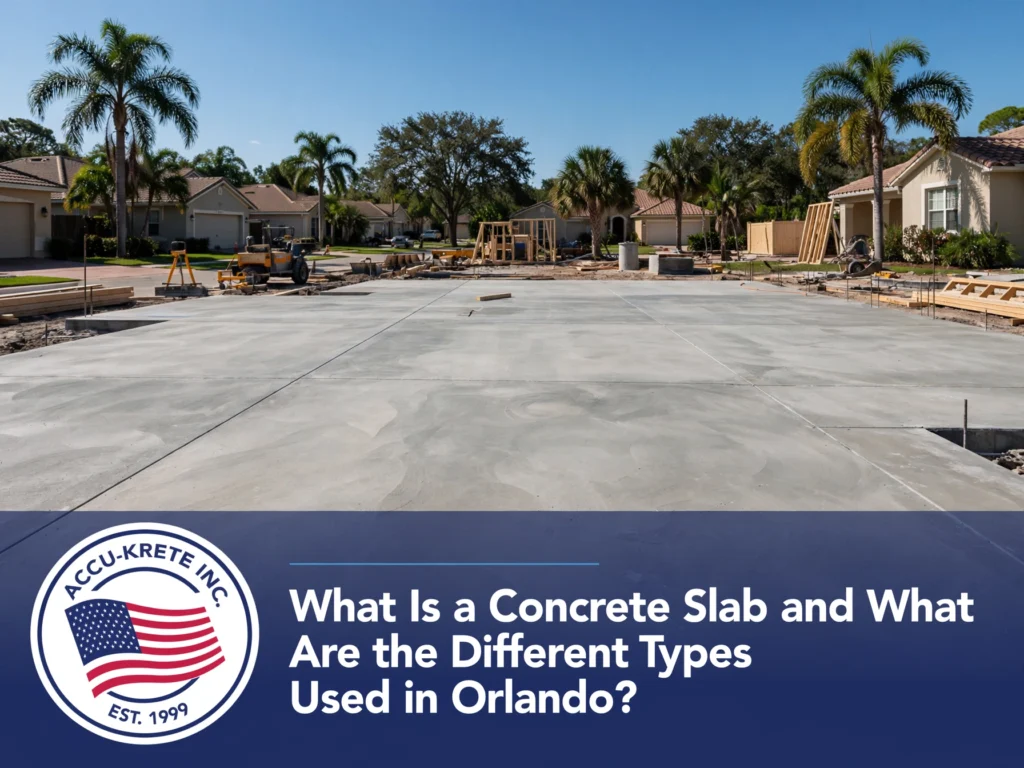
Not all concrete slabs are built the same. The right slab design depends on factors such as soil conditions, structural loads, slab thickness, reinforcement, and the intended use of the surface. From residential concrete foundation slabs to reinforced concrete floor slabs, each type is designed to meet specific performance requirements. In this guide, you’ll learn what a concrete slab is, the different types available, common applications, construction methods, and the key factors that affect its strength and durability.
How a Concrete Slab Works
A concrete slab is a flat, reinforced layer of concrete that serves as a strong foundation and provides reliable structural support for homes, garages, patios, driveways, and commercial buildings. It works by evenly distributing the weight of the structure across the ground or a supporting framework, reducing stress and improving stability.
Built using a quality concrete mix, proper concrete slab reinforcement, and professional concrete installation, a well-constructed slab delivers excellent concrete strength, long-term durability, and dependable performance for a wide range of construction projects.
Core Components of a Concrete Slab
Every durable concrete slab starts with carefully selected ingredients. Although concrete appears simple, it is a carefully balanced combination of materials that work together to deliver strength and durability. The main ingredients include:
- Cement – the binding material made primarily from limestone, clay, and calcium-rich compounds.
- Aggregates – typically sand and gravel, which provide bulk and structural strength.
- Water – activates the cement and begins the hydration process.
- Optional admixtures that improve workability, curing time, or weather resistance.
For projects requiring additional strength, contractors add reinforced concrete slab systems using steel reinforcement. Reinforcement bars work together with concrete to resist cracking and improve load capacity. In larger structural applications, reinforced concrete beams and structural steel beams may also be integrated into the overall support system for enhanced stability.
Cement vs. Concrete — What’s the Difference?
Although the terms are often used interchangeably, cement and concrete are not the same. Cement is a fine binding powder made primarily from limestone and clay, while concrete is the finished construction material created by mixing cement with sand, gravel (aggregates), and water.
Understanding the difference is important because concrete provides the strength, durability, and structural support used in concrete slabs, foundations, driveways, patios, and commercial buildings.
| Feature | Cement | Concrete |
| Definition | A binding ingredient used in construction | A finished building material made from cement, aggregates, and water |
| Main Components | Limestone, clay, and calcium compounds | Cement, sand, gravel (aggregates), water, and admixtures |
| Purpose | Binds construction materials together | Provides structural strength and durability |
| Common Uses | Mortar, grout, and concrete production | Concrete slabs, foundations, patios, driveways, floors, and buildings |
| Strength | Not designed for structural loads by itself | High compressive strength for load-bearing applications |
Types of Concrete Slabs
Different construction projects require different slab designs. The choice depends on building size, expected loads, soil conditions, and structural engineering requirements. Below are the most common types of concrete slabs used in modern construction.
One-Way Slab
A one-way slab transfers its load primarily in one direction because it is supported on two opposite sides. These slabs are commonly reinforced in one direction to resist bending forces.
One-way slabs are widely used in residential construction, including concrete slab for garages, small rooms, and straightforward building layouts. They offer a practical solution for projects with shorter spans and moderate load requirements while keeping construction costs manageable.
Two-Way Slab
Unlike a one-way slab, a two-way slab distributes loads in both directions because it is supported on all four sides. Reinforcement is placed in both directions to improve strength and reduce deflection.
Two-way slabs are frequently used in commercial construction, apartment buildings, and larger residential projects where greater load distribution is needed. Their balanced structural performance allows them to handle heavier loads while maintaining a stable flat concrete surface.
Flat Slab
A flat slab is supported directly by columns without the use of supporting beams beneath the slab. This creates a clean ceiling appearance while simplifying interior layouts. Flat slabs are popular in offices, hotels, parking structures, and modern residential buildings because they allow greater flexibility for room arrangements and mechanical systems. Their simplified design can also reduce overall floor height while maintaining effective structural support.
Suspended Slab
A suspended concrete slab is elevated above ground and supported by beams, walls, or columns instead of resting directly on soil. Unlike a ground-bearing slab, it does not rely on the earth for support.
Suspended slabs are commonly used for upper floors, basement slab systems, balconies, parking decks, roof deck structures, and concrete ceiling slab installations. They are ideal when ground conditions are unsuitable or when multiple building levels require dependable structural performance.
Waffle Slab
A waffle slab features a grid-like pattern underneath that reduces the amount of concrete used while maintaining high strength. Its ribbed design provides exceptional load-carrying capacity over longer spans.
Because of their efficiency, waffle slabs are frequently selected for shopping centers, airports, industrial facilities, and large commercial buildings. They combine excellent heavy load resistance with material efficiency, making them a popular choice for demanding construction projects.
How Thick Should a Concrete Slab Be?
The ideal concrete slab thickness depends on the type of project, the amount of weight the slab will support, soil conditions, and local building requirements. A properly sized concrete slab improves concrete strength, prevents premature cracking, and provides a stable, long-lasting foundation for residential and commercial construction.
Recommended Concrete Slab Thickness:
- 4 inches – Standard concrete patio slab, walkways, and most residential concrete flooring.
- 4–6 inches – Concrete driveway slab and garage floors that support passenger vehicles.
- 5–6 inches – Workshop floors and light commercial applications with moderate loads.
- 6 inches or more – Heavy-duty concrete slabs used in warehouses, industrial buildings, and other commercial construction projects.
- 8 inches or more – Structural slabs designed for heavy machinery, large equipment, or high-load industrial facilities (based on engineering specifications).
Common Uses of Concrete Slabs
Concrete slabs serve as the backbone of countless residential and commercial structures. Their versatility allows them to perform well in a wide variety of environments while providing dependable structural support.
Residential Applications
In residential construction, slabs create stable foundations and durable outdoor living spaces. A concrete slab foundation for homes supports walls, floors, and roofing systems while resisting settlement over time. Common residential applications include:
- Home foundation systems
- Concrete driveway slab installations
- Concrete patio slab projects
- Garage floors
- Walkways
- Outdoor entertainment areas
- Shed foundations
Many homeowners choose residential concrete slab services because properly installed slabs require relatively little concrete slab maintenance and offer decades of dependable performance. With occasional inspections and timely concrete slab repair, homeowners can preserve both appearance and structural integrity.
Commercial and Structural Applications
Commercial buildings require stronger slabs designed for higher traffic volumes and heavier equipment. In these settings, structural concrete slabs support offices, warehouses, manufacturing facilities, retail centers, and multi-story buildings. Commercial applications often include:
- Building foundations
- Industrial flooring
- Distribution centers
- Parking garages
- Loading docks
- High-rise floor systems
- Concrete roofing slab installations
These projects often incorporate advanced structural engineering, reinforced concrete, and specialized support systems to maximize safety and durability. A properly designed heavy-duty concrete slab ensures reliable load-bearing concrete performance while maintaining long-term building durability.
How Much Does a Concrete Slab Cost?
The cost of a concrete slab varies depending on the size of the project, concrete slab thickness, reinforcement requirements, site conditions, and local labor rates. A basic concrete patio slab or walkway is generally more affordable than a reinforced concrete slab used for a home foundation, garage, or commercial building.
Additional features such as excavation, grading, decorative finishes, and specialized concrete slab installation methods can also affect the final price. While cost is an important consideration, quality should never be overlooked.
Investing in professional concrete slab services and experienced concrete slab contractors helps ensure proper installation, long-term concrete durability, and fewer repair expenses in the future. A well-built slab offers excellent structural support, improves property value, and provides a reliable foundation that can last for decades with proper maintenance.
How Long Does a Concrete Slab Last?
A professionally installed concrete slab can last 50 years or more, with many well-maintained slabs remaining structurally sound for decades. Its lifespan depends on the quality of the concrete mix, proper installation, regular concrete slab maintenance, soil conditions, drainage, and the amount of weight the slab supports.
Investing in quality workmanship helps maximize concrete durability and reduce future repair costs.
Factors That Shorten Slab Lifespan
Several conditions can reduce the life of a concrete slab if they are not addressed early.
- Poor site preparation or unstable soil
- Improper drainage around the foundation
- Freeze-thaw damage in cold climates
- Heavy loads beyond the slab’s design capacity
- Low-quality concrete or improper curing
- Lack of reinforcement
- Tree roots causing ground movement
- Delayed concrete slab repair and maintenance
Signs Your Concrete Slab Needs Attention
Early detection helps prevent costly structural repairs and extends the slab’s lifespan.
- Visible cracks that continue to grow
- Uneven or sinking slab sections
- Water pooling on the surface
- Surface scaling or spalling
- Gaps around walls or expansion joints
- Doors or windows are becoming difficult to open due to foundation movement
Concrete Slab Installation — What the Process Looks Like
A successful concrete slab installation follows a step-by-step process that ensures long-term strength, stability, and performance. From preparing the ground to curing the finished slab, every stage plays an important role in creating a durable concrete foundation that can support residential and commercial structures for decades.
Site Preparation and Base Work
The first step is clearing and grading the construction area before compacting the soil to create a stable base. Contractors then install gravel or crushed stone for drainage, place forms around the slab area, and add concrete slab reinforcement such as rebar or wire mesh when required. Proper base preparation helps prevent settling, cracking, and drainage problems.
Pouring and Finishing
Once the base is ready, the concrete mix is poured evenly into the forms and spread across the surface. Contractors level, smooth, and finish the slab using specialized tools to create a durable, even surface. Expansion joints may also be added to help control cracking caused by temperature changes.
Curing Time and What to Expect
After pouring, the slab begins the curing process, which allows the concrete to gain strength gradually. While the surface may be safe for light foot traffic within 24–48 hours, full curing typically takes about 28 days. During this period, protecting the slab from heavy loads and maintaining proper moisture levels helps maximize concrete strength and long-term durability.
Concrete Slab Maintenance Tips
Proper concrete slab maintenance helps extend the life of your investment and keeps the surface looking and performing its best. Routine inspections and preventive care can reduce the need for major concrete slab repair while preserving structural integrity.
- Clean the surface regularly to remove dirt and debris.
- Seal the concrete periodically to protect against moisture and stains.
- Repair small cracks before they expand.
- Keep drainage systems working properly to prevent water accumulation.
- Avoid placing excessive loads beyond the slab’s design capacity.
- Remove oil, grease, and chemical spills promptly.
- Inspect expansion joints and replace damaged joint filler when needed.
- Schedule professional inspections if you notice settlement, large cracks, or uneven areas.
Conclusion
A concrete slab is one of the most important components of modern construction, providing a strong, stable, and durable base for homes, garages, patios, driveways, and commercial buildings. Choosing the right type of concrete slab, proper concrete slab thickness, and quality materials plays a major role in ensuring long-term structural performance. Whether you’re planning a new concrete slab foundation, replacing an old surface, or starting a construction project, understanding the basics helps you make informed decisions.
Professional concrete slab installation and regular concrete slab maintenance significantly extend the lifespan of your investment while reducing future repair costs. With proper site preparation, reinforcement, and curing, a well-built slab can provide decades of reliable service, making it one of the most cost-effective and dependable construction solutions available.
FAQs
What is the standard thickness for a residential concrete slab?
Most residential concrete slabs are 4 inches thick, while driveways and garage floors typically require 4 to 6 inches depending on the expected load and local building codes.
Can a concrete slab crack over time?
Yes. Small cracks can develop because of normal settling, temperature changes, shrinkage, or heavy loads. Proper installation, reinforcement, and regular maintenance help minimize cracking.
Is a concrete slab the same as a foundation?
Not always. A concrete slab is a flat structural element, while a foundation is the entire system that supports a building. A slab can serve as a foundation, such as a slab-on-grade foundation, but foundations may also include footings, basements, or crawl spaces.
What is the meaning of concrete slab?
A concrete slab is a flat, horizontal layer of concrete designed to provide structural support for buildings, floors, patios, driveways, and other construction projects.
What is concrete slab used for?
Concrete slabs are used for home foundations, garage floors, concrete patios, concrete driveways, sidewalks, warehouses, commercial flooring, parking areas, and many other residential and commercial applications.
What is the difference between concrete slabs and foundations?
A concrete slab is a single structural component, whereas a foundation is the complete system that transfers a building’s load safely to the ground. Some foundations use concrete slabs, while others include footings, foundation walls, basements, or crawl spaces.
Professional Concrete Services in Orlando, FL
Accu-Krete provides reliable concrete installation, repair, decorative concrete, patios, driveways, and sidewalk solutions for homeowners and businesses across Orlando and nearby areas.