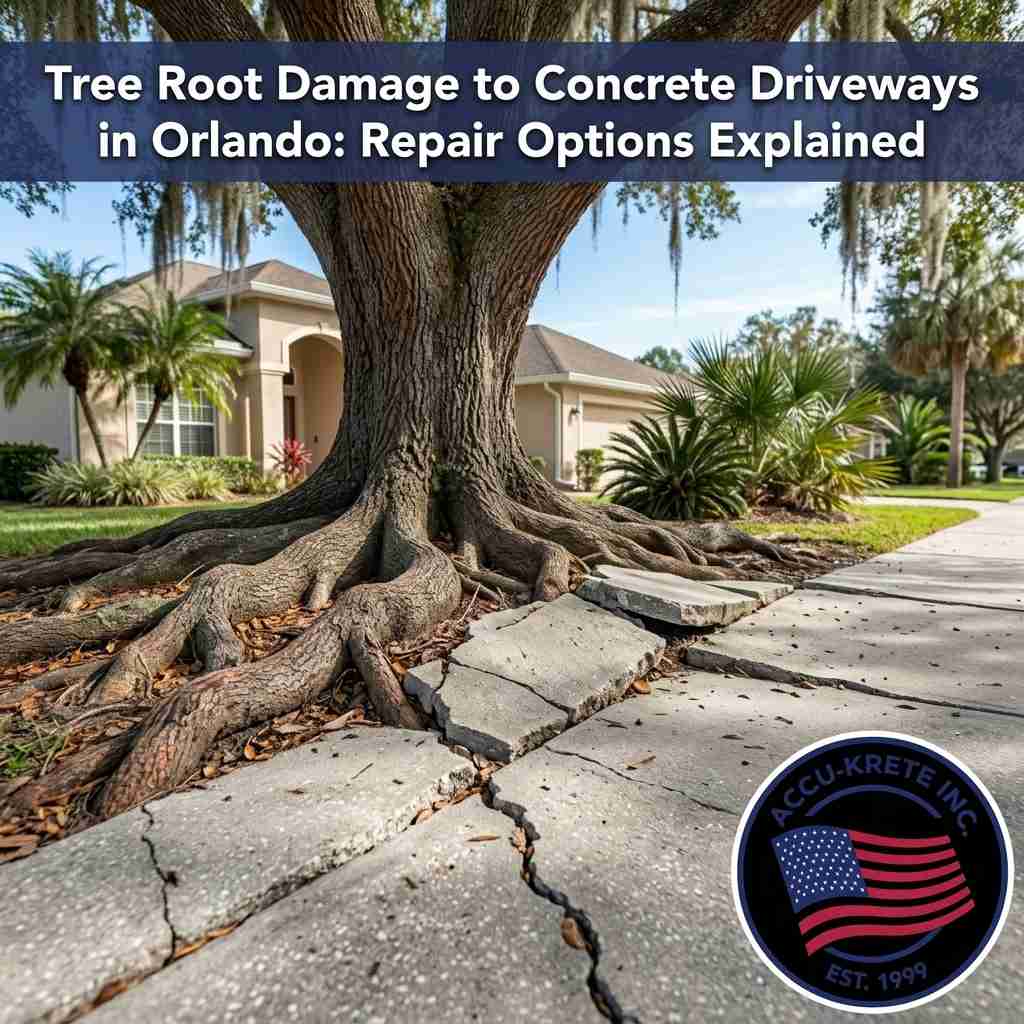
Most property owners do not notice the underground battle happening between their trees and their concrete driveways until the damage becomes clearly visible on the surface. Below the ground, spreading root networks silently push against heavy concrete slabs, causing major displacement, ugly cracking, and dangerous trip hazards along your main entryways. Catching tree root damage to your driveway early is key to stopping small hairline cracks from turning into complete structural failures that destroy your home’s curb appeal.
Acting quickly is always the best approach for protecting the long-term value, safety, and appearance of your home’s exterior pathways. Waiting too long allows aggressive underground growth to warp solid foundations, which leads to vehicle alignment problems and liability risks from trip hazards. Having a proactive management plan in place ensures your driveway and your trees can coexist without needing a full demolition later on.
How Tree Roots Cause Driveway Damage
Root systems constantly spread outward in search of water, nutrients, and oxygen in the soil. This natural growth pattern easily takes advantage of the loose soil directly beneath concrete slabs, where moisture tends to collect over time. As these underground networks grow thicker and spread wider, they push upward with enormous force that completely destabilizes the pavement above them.
This steady upward pressure directly causes serious concrete driveway damage as well as costly asphalt driveway damage. As a result, driveways quickly develop deep cracks and uneven surfaces that break down the overall structure. If left unmanaged, this ongoing movement destroys the base support and makes driving smoothly over the surface nearly impossible.
Assessing and Identifying Tree Root Damage
Accurately figuring out what is causing the ground to move requires a careful physical inspection of all visible cracks, ridges, and shifting concrete sections. Homeowners need to trace the direction of upward buckles to identify which nearby trees are responsible for the structural damage. Detailed assessments often reveal that an aggressive, spreading root network has completely weakened the gravel base beneath the driveway.
In some cases, property owners may need to cut out sections of damaged asphalt to get a clear look at the underground obstruction causing the problem. Bringing in a professional helps determine whether the damage was caused by poor foundation setup or by natural root growth.
Analyzing Tree Canopy and Soil Conditions
Getting a true picture of how far underground roots have spread requires looking up at the full width of the tree canopy above the driveway. A large, mature canopy is a strong sign that a massive hidden root network extends well beyond the visible branch lines of the tree.
This widespread growth becomes a serious problem when the soil beneath the driveway is not dense enough, leaving loose dirt that roots can easily move through. Soil that lacks proper compaction allows moisture to collect, which draws thick roots straight toward the underside of your driveway.
Navigating Boundaries and Legal Concerns
Dealing with structural damage near property lines requires careful attention to avoid disputes with neighbors over shared landscaping. Damaging a mature tree can lead to significant financial liability under property line tree damage regulations.
Homeowners should fully review all relevant local rules and ordinances before starting any major digging, cutting, or clearing work on their property. Ignoring these regulations can result in heavy fines and permanent damage to valuable trees in the neighborhood.
Implementing Professional Remediation Strategies
Hiring a certified arborist ensures that your driveway repairs do not accidentally harm or kill your valuable shade trees. These specialists use advanced and safe methods to deal with underground obstructions while keeping the tree healthy. Once the immediate physical problem is cleared, long-term preventative systems keep the pavement flat, secure, and protected from future root encroachment.
- Hire a Certified Arborist: Always get advice from a licensed arborist to assess tree health before cutting any significant root growth under the driveway.
- Use Safe Pruning Techniques: Apply targeted root pruning techniques to cleanly cut through problematic roots without destabilizing the tree’s overall structure.
- Execute Targeted Root Removal: Carry out strategic tree root removal to get rid of the specific underground growth that is causing the surface to lift.
- Install Underground Barriers: Place strong vertical underground barriers to stop future roots from spreading laterally into the cleared soil zone beneath the driveway.
- Secure Long-Term Protection: Complete a proper root barrier installation to protect the base gravel pad from future underground penetration.
- Restore the Pavement: Finish with a professional driveway surface repair to create a smooth, safe, and completely level path for vehicles.
Repairing a Driveway Damaged by Tree Roots
Restoring a driveway that has been broken up by underground root growth requires a step-by-step approach that deals with the root cause of the problem before any new material is poured. Simply patching the surface is only a short-term fix that will fail again quickly if the expanding root network underneath is not addressed.
Property owners need to dig up the damaged area, evaluate the base material, and deal directly with the physical obstructions below. Taking the time to properly clear and prepare the foundation ensures that the new pavement stays level, safe, and durable for many years.
Excavation and Base Preparation
A proper restoration starts by using a concrete saw to cleanly cut out the damaged asphalt or cracked concrete sections around the area that has been lifted. Once the broken pieces are removed, you need to dig carefully down into the ground to expose the invasive root systems that are actively undermining the foundation.
This step lets you see the full extent of the underground damage and prepares the ground for proper leveling. Thorough excavation stops old debris from creating weak pockets beneath your fresh pavement later on.
Root Mitigation and Surface Restoration
Before any new material is poured, you must consult a licensed arborist to carry out precise root pruning, making sure the process does not destabilize or kill the tree. After the necessary tree root removal is complete and the thick, woody obstructions under the pavement have been cleared, the focus shifts to the soil base below.
Level and re-compact the underlying subgrade, using proper soil compaction measures to stop future shifting from occurring. Then pour fresh concrete or asphalt over the prepared base to complete a durable and seamless driveway surface repair.
| Repair Phase | Required Equipment & Tools | Materials & Specifications | Core Operational Metric |
| 1. Cutting & Excavation | Walk-behind diamond blade concrete saw, 60-lb demolition jackhammer, square spades. | Marking crayon, safety gear, heavy-duty debris disposal bin. | Cut a minimum of 12 inches beyond the furthest visible crack line to ensure a stable perimeter. |
| 2. Root Mitigation | Reciprocating saw (with pruning blades), hand loppers, bypass pruners. | 30-mil to 60-mil High-Density Polyethylene (HDPE) vertical root barrier sheets. | Clean, non-ragged root cuts; install root barrier at least 12 to 24 inches deep to divert future growth downward. |
| 3. Subgrade Stabilization | Mechanical plate compactor (vibratory), hand tamper for tight corners. | Class 2 crushed aggregate base (¾-inch minus gravel), water for moisture optimization. | 95% relative soil compaction density; minimum 4-inch base layer thickness. |
| 4. Surface Pouring | Concrete mixer or transit-mix truck, finishing trowels, screed board. | 4,000 PSI air-entrained concrete mix or hot-mix asphalt (HMA), steel rebar (#3 or #4 grid). | Maintain a minimum 4-inch thickness for residential vehicles; slope surface 2% for water drainage. |
Preventing Future Tree Root Damage
The most effective way to protect your driveway investment is to put physical defenses in place during construction or right after a repair is completed. Because major roots keep spreading outward as a tree matures and its canopy grows wider, you need to physically block their path before they reach the pavement.
Putting these preventative strategies in place keeps your driveway safe without causing harm to your trees or landscaping.
Subsurface Growth Barriers
Stopping future root spread requires installing strong vertical underground barriers along the edge of your driveway. The root barrier installation must go deep enough into the ground to force spreading roots to grow downward rather than sideways toward the pavement. This physical shield prevents thick roots from creeping back under the driveway and lifting the newly poured material all over again.
Soil Density and Tree Proximity
Applying proper soil compaction measures during repairs creates a firm, dense environment that naturally discourages roots from pushing through. Soil that is not dense enough contains loose pockets where air and water collect, drawing aggressive root systems straight toward the underside of your driveway.
You should also look at the width of the tree canopy to get a rough idea of how far the underground root network is likely to extend across your property. Keeping a safe distance between new concrete slabs and the canopy of a mature, aggressive tree reduces the risk of future structural damage significantly.
Conclusion
Managing the conflict between mature trees and solid concrete driveways requires a careful balance of tree care and structural protection. Ignoring early signs of surface lifting or overlooking hidden root growth beneath the driveway leads to serious structural damage and real safety hazards. Using smart physical defenses, accurate professional assessments, and proper repair steps allows you to protect your property’s value while keeping your trees healthy and intact.
Long-term protection depends on addressing the actual source of the displacement rather than just patching cracked surfaces at the top. Combining strong physical barriers with correct installation techniques prevents recurring underground encroachment from damaging your hardscaping investment. Taking clear, legally compliant action today ensures your driveway stays level, safe, and visually appealing for many decades to come.
Frequently Asked Questions
What methods are available to repair a driveway damaged by tree roots? Property owners can cut out the damaged asphalt or concrete sections, clear the underlying root growth, and carry out targeted tree root removal. Completing a proper root barrier installation before pouring fresh material prevents future structural problems from returning.
Which materials are best suited for driveways to minimize root damage? Interlocking pavers are a very good option because individual pieces can be adjusted or replaced without requiring a full driveway surface repair. Rigid solid slabs, on the other hand, crack easily under the strong upward pressure that invasive root systems create.
Who is responsible for damage caused by tree roots to adjacent property? Liability for property line tree damage depends on your specific local regulations and municipal rules. Consulting a certified arborist and reviewing boundary guidelines helps clarify who is responsible for maintenance and prevents disputes with neighbors.
How to know if tree roots lift a driveway? Look for clear linear ridges, localized buckling, and deep cracks and uneven surfaces that line up with a nearby mature tree. Digging along the edge of the pavement often exposes an aggressive underground root network pushing upward against the base.
Do tree roots keep growing after a tree is cut down? Most roots stop growing and gradually decay once the main trunk is removed and the tree no longer has a nutrient source. However, some aggressive tree species can produce persistent new shoots that require targeted chemical treatment to fully kill the remaining underground network.How to stop tree roots from damaging concrete? Installing strong vertical underground barriers deep into the soil directs lateral root growth away from your pavement. Applying strict soil compaction measures during installation also discourages roots from seeking moisture directly beneath the structure.
Professional Concrete Services in Orlando, FL
Accu-Krete provides reliable concrete installation, repair, decorative concrete, patios, driveways, and sidewalk solutions for homeowners and businesses across Orlando and nearby areas.