
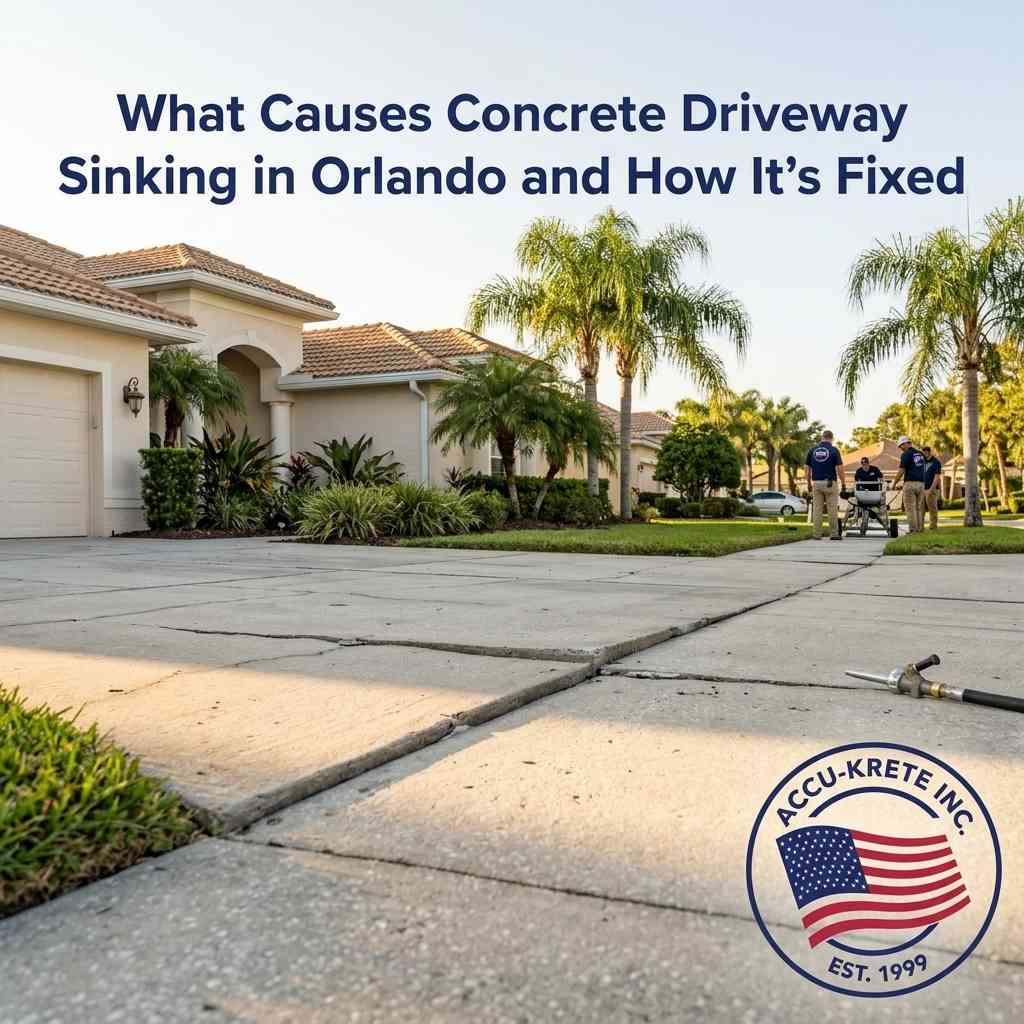
A sunken and uneven driveway is not just ugly to look at — it is a real safety problem that also hurts your property’s overall appearance and value. When concrete slabs start to dip or crack, most homeowners think the concrete itself is the problem, but in almost every case, the real issue is happening right underneath the surface. Ignoring the early warning signs of concrete settling can take what starts as a small repair and turn it into a very expensive full replacement.
Understanding what actually causes this kind of structural shifting is the first step toward finding a lasting solution. Choosing the right repair method depends heavily on figuring out whether the problem comes from unstable soil, weather conditions, or mistakes made during the original installation. Once you understand the forces causing the damage, you can pick the correct approach to restore both the safety and value of your property.
What Does Concrete Driveway Sinking Look Like?
You do not need any special tools to notice a sinking driveway because the signs are easy to see and they get worse over time. When the ground under your driveway moves, the concrete loses its support and starts showing clear signs of stress. Homeowners should check their driveways regularly for these warning signs so they can catch structural problems before a full replacement becomes necessary.
- Uneven Concrete Slabs: The most obvious sign is a clear height difference where two sections of the driveway meet, with one slab sitting noticeably lower than the one next to it, creating a dangerous tripping hazard.
- Cracked Concrete: As the settling gets worse, the stress on the shifting material causes deep cracks to form along the joints and across the surface of the slabs.
- Water Pooling: You will start to see rainwater collecting in the low spots instead of draining away properly, which makes the damage to the base even worse over time.
- Sunken Garage Entrances: In serious cases, the concrete right at the garage entrance drops down and creates a rough, jarring bump every time you drive in or out.
- Visible Soil Voids: If you look carefully at the edges of your driveway, you can often spot open gaps and hollow spaces forming between the bottom of the concrete and the ground below it.
Top Causes of Concrete Driveway Sinking
Before you call a concrete repair company, it is important to understand exactly what is causing the problem in the first place. Several environmental forces and installation mistakes can work together to weaken the strength of your driveway slabs. By looking closely at the specific conditions around your property, you can find the exact source of the problem and take steps to make sure it does not happen again.
1. Soil Erosion
Soil erosion is one of the main reasons a concrete driveway sinks because it removes the very ground that is holding the heavy material up. When heavy rain, melting snow, or a broken underground pipe sends water running beneath the driveway, it carries the fine soil particles away with it.
This ongoing washing creates hidden empty spaces under the surface, and as those spaces grow, the heavy concrete slabs gradually drop into them. Without solid ground underneath, even thick slabs will crack and fail under normal use.
2. Poor Drainage / Water Pooling
Water that is not properly directed away from your driveway is a serious threat to its stability. If your gutters, downspouts, or the layout of your yard sends rainwater flowing toward the edges of the driveway, the soil underneath will become completely oversaturated.
This excess water turns firm, load-bearing soil into soft mud that can no longer support the weight of the concrete above it. Over time, constant water pooling breaks down the entire base structure, making repairs unavoidable.
3. Tree Root Damage
Large trees that are planted too close to a driveway cause serious underground damage as their roots grow and spread over the years. When roots grow directly under the slabs, they physically push the concrete upward, causing cracks and an uneven surface.
On the other hand, when those same roots die or shrink during dry periods, they leave behind large hollow spaces with nothing to support the concrete above. The heavy slabs then drop into those empty spaces, creating a very uneven and dangerous driveway.
4. Weak or Poorly Compacted Subbase
A long-lasting driveway depends completely on the soil being properly packed down during construction. If the original contractor did not tightly compact the dirt and gravel base before pouring the concrete, the ground stays loose, unstable, and full of air pockets.
Over time, the weight of the concrete and vehicles pressing down forces these loose soil particles to shift and pack closer together on their own. This creates a gap directly under the slab. Without solid ground to carry the load, the slabs begin to sink, crack, and eventually fail.
| Subbase Issue | Direct Impact on Driveway | Long-Term Consequence |
| Loose Dirt & Gravel | Traps air pockets and moisture under the concrete. | Soil shifts and self-compacts over time. |
| Inadequate Tamping/Rolling | Creates an uneven foundation with weak spots. | Major gaps and voids form beneath the slab. |
| Heavy Vehicle Load | Pushes down on the unsupported concrete areas. | Rapid sinking concrete and severe structural cracking. |
5. Freeze-Thaw Cycles
Seasonal temperature changes put a lot of physical stress on outdoor concrete. In winter, moisture in the soil beneath the driveway freezes and expands, which physically lifts the concrete slabs upward.
When spring comes and everything thaws, the ground contracts quickly and leaves behind a weakened and unstable foundation. This repeated lifting and dropping motion cracks the concrete, speeds up settling, and damages the smooth surface of your driveway over time.
6. Heavy Vehicle Load
Every driveway is designed to handle a specific maximum weight based on normal residential use. When very heavy vehicles such as large delivery trucks, RVs, or construction equipment are parked on a residential driveway, they put extreme downward pressure on the slabs.
If the soil underneath is already a little weak, this extra weight pushes the slabs down and causes serious settling. Putting too much weight on an already compromised base leads to deep cracks and forces homeowners to look for ways to fix the damage quickly.
Warning Signs Your Driveway is Sinking
Spotting structural problems early can save you thousands of dollars in demolition and rebuilding costs. Before a slab drops significantly, the ground beneath it gives off quiet signals that it is losing its ability to carry the load. Homeowners who miss these early signs end up dealing with major structural hazards that put both vehicles and people at risk.
- Hairline Fractures Along Joints: Small, web-like cracks near the expansion joints are a sign that the concrete is bending because it is not being supported evenly from below.
- Popping or Snapping Sounds: When you drive over the driveway and hear distinct popping noises, it means the concrete is flexing over hollow pockets hidden beneath the surface.
- Chipping Slab Edges: When neighboring slabs shift at different rates, their edges rub against each other under the weight of traffic, causing the material to chip and break off.
- Soil Washout Around Edges: If you see loose dirt or gravel collecting near the bottom edges of your driveway after rain, it means water is actively pulling the base material out from under the slab.
How to Fix a Sinking Concrete Driveway
Fixing a damaged driveway no longer means you have to tear everything out and start from scratch, thanks to modern repair methods. Property owners can choose between traditional approaches or more advanced technical solutions depending on their budget and how badly the foundation is damaged. By dealing with the root cause under the slab, these methods ensure your driveway stays safe, strong, and looking good for many years.
1. Polyurethane Foam Injection
This modern lifting method involves drilling small holes into the slab and injecting a lightweight liquid polymer through them. The liquid expands quickly into a dense, waterproof foam that fills the empty spaces under the concrete and lifts the surface back into position with great precision.
Because the foam sets within just a few minutes, you can drive on the repaired surface almost right away. This process leaves very small marks on the driveway and the foam will not wash away in future rain.
2. Sectional Driveway Replacement
If the concrete has suffered advanced cracking that is too severe to be lifted, replacing the damaged sections becomes necessary. Workers break up and remove the ruined portions, fully re-compact the base material underneath, and pour fresh concrete that is leveled and finished to match the rest of the driveway. This approach takes several days to fully cure but gives you a completely new and structurally sound surface in the areas that were badly damaged.
How to Prevent Concrete Driveway Sinking
Staying on top of regular maintenance is the most effective way to protect your driveway from expensive settling problems. Since water and loose soil are the two biggest threats to concrete stability, managing how your property handles water flow stops shifting before it begins.
Simple structural steps keep the ground firm and protect the driveway from heavy traffic damage. Regular inspections let you catch small problems before they become large, dangerous, and costly ones.
Seal Cracks and Expansion Joints
Filling minor cracks with a good quality polyurethane sealant stops rainwater from getting down into the base and washing away the soil. Water that seeps through unsealed cracks softens the ground below and speeds up the damaging freeze-thaw cycle during winter.
Keeping these gaps properly sealed ensures the base stays dry and firmly packed. This simple and affordable maintenance step can add many years to the life of your driveway.
Optimize Gutter Downspouts
Make sure all roof runoff is directed at least five feet away from the edges of your driveway to stop water from building up around the base. When downspouts empty out right next to the concrete, the large volume of water creates underground channels that wash away the supporting soil.
This continuous water flow breaks down the base and causes the slabs to tilt and sink. Pointing downspouts toward the street or lawn keeps heavy rainwater safely away from your driveway.
Maintain Compacted Border Soil
Keep the soil along the sides of your driveway tightly packed and sloped slightly downward so water naturally drains away from the slabs. Erosion along the edges often exposes the sides of the base, leaving it open to being washed away during heavy storms.
Adding fresh topsoil and packing it firmly against the concrete stops voids from forming along the outer edges. This simple step locks the base material in place and keeps the whole structure evenly supported.
Install Underground Root Barriers
If you have trees near your driveway, install plastic barriers deep in the soil to redirect aggressive roots away from the slabs. Large root systems can grow right under the concrete, push it upward, and create serious tripping hazards.
When those roots eventually shrink during dry weather, they leave behind large hollow spaces that cause sudden and severe cracking. Physical barriers force the roots to grow in a different direction, keeping your driveway safe and structurally sound.
Conclusion
A sinking concrete driveway is a structural problem that gets worse on its own and will never fix itself. Ignoring early warning signs like hairline cracks or standing water allows soil erosion and drainage problems to completely destroy the foundation underneath. By understanding what causes concrete settling and acting quickly when you notice the signs, homeowners can avoid the massive costs that come with a full demolition and replacement.
Investing in professional repair methods like polyurethane foam injection or mudjacking brings back the safety, function, and appearance of your property. Combining these advanced repair techniques with regular maintenance habits like sealing joints and managing rainwater ensures a long-lasting surface. Dealing with base instability early protects your vehicles, keeps your home looking its best, and preserves its overall market value.
FAQs
Q: Is a sinking driveway dangerous? Yes, uneven slabs create immediate tripping hazards for anyone walking on them and can cause serious alignment damage to vehicles over time. The rough edges can also pop tires and allow water to pool right against your home’s foundation.
Q: Does homeowners’ insurance cover sinking driveways? Standard homeowners’ insurance policies generally do not cover concrete settling caused by natural soil erosion, compaction, or normal wear and tear. Coverage usually only applies if the damage was caused directly by a sudden event like a major accident or a catastrophic fire.
Q: What is the average lifespan of a concrete driveway? A professionally installed concrete driveway can last between 25 and 30 years when built on a properly compacted base. Regular upkeep like sealing cracks and managing water runoff can extend its life even further beyond that.
Q: How much does it cost to fix a sinking concrete slab? Professional concrete lifting typically costs between 50 and 70 percent less than the full price of breaking out and replacing the old material. The final cost depends on the size of the slab, how much foam is needed, and how severe the underground voids are.
Q: Can you raise sunken concrete yourself? Lifting heavy concrete slabs requires specialized equipment, industrial materials, and precise calculations that basic DIY kits simply cannot provide. Trying to lift a driveway without the right tools often causes the concrete to shatter, resulting in damage that is far more expensive to fix.Q: What to do if your driveway is sinking? Contact a certified concrete repair company right away to assess the stability of the base and find the exact source of the movement. Acting quickly gives technicians the chance to stabilize the soil and level the surface before the damage goes beyond the point of repair.
Professional Concrete Services in Orlando, FL
Accu-Krete provides reliable concrete installation, repair, decorative concrete, patios, driveways, and sidewalk solutions for homeowners and businesses across Orlando and nearby areas.